
Merchant Services
Payment solutions for consumer finance
Finding the right way to accept payments from your customers shouldn't be a headache. This guide explains how small businesses can set up reliable card processing and modern POS systems.

Payment solutions for consumer finance are the backbone of any modern small business that wants to grow and stay competitive. When we talk about these solutions, we are talking about the tools and services that allow you to accept credit cards, debit cards, and mobile payments from your customers. For a small business owner, this means choosing a merchant account, picking the right hardware, and understanding the fees that come with every swipe or dip. If you are just starting out, you might find our consumer payment solutions small business guide very helpful for setting the foundation.
How Merchant Accounts Work for Your Business
A merchant account is a special type of bank account that allows your business to accept card payments. It is not like your personal checking account. When a customer pays you with a credit card, the money does not go straight to your business bank account. First, it goes into the merchant account. The processor checks to make sure the funds are available and that the transaction is safe. Once everything is cleared, the money is moved to your regular business bank account. This usually takes one to two business days.
Choosing the right merchant account provider is one of the most important decisions you will make. Some providers offer flat rates, while others use a model called interchange-plus. For many businesses in the Alabama payment processing market, interchange-plus is often the more transparent choice because it shows you exactly what the card brands like Visa and Mastercard are charging versus what the processor is keeping as profit.
Recent industry studies show that businesses that offer at least three different ways to pay—such as chip cards, tap-to-pay, and digital wallets—see a significant increase in customer satisfaction and repeat visits.
Understanding Credit Card Processing Fees
Fees are often the biggest source of frustration for small business owners. Every time a customer uses a card, a small piece of that sale goes to the banks and the processors. These are called processing fees. There are three main parts to these fees: interchange fees, assessment fees, and the processor's markup. Interchange fees are set by the card networks and go to the bank that issued the customer's card. Assessment fees go to the card brands themselves. The markup is what you pay to your merchant services provider.
If you feel like you are paying too much, you are not alone. Many businesses are moving toward "Dual Pricing" or "Surcharging" models. These programs allow you to pass the cost of processing on to the customer if they choose to pay with a credit card, while offering a lower price for those who pay with cash. This can effectively bring your processing costs down to nearly zero. You can see how this works in action by viewing our live demo of modern payment terminals.
Modern POS Terminals and Hardware
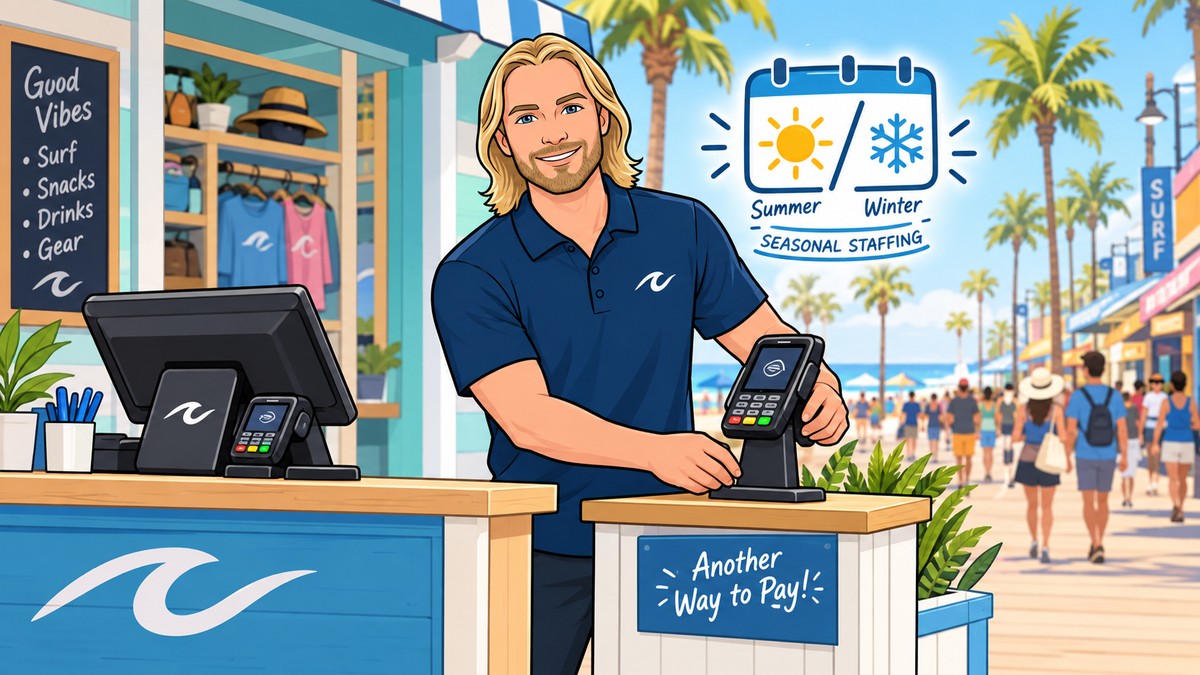
The hardware you use to take payments is called a Point of Sale (POS) system or a terminal. Gone are the days of the old "knuckle-buster" machines. Today, you have options ranging from simple countertop terminals to full POS systems that manage your inventory and staff. If you run a retail shop or a restaurant, a smart terminal is usually the best bet. These devices have touchscreens, built-in printers, and can handle contactless "tap-to-pay" transactions from phones and watches.
For businesses that move around, like a food truck or a mobile service provider in Gulf Shores credit card processing, mobile readers are a great choice. These small devices plug into a phone or tablet and let you take payments anywhere you have a data connection. The key is to make sure your hardware is EMV compliant. This means it can read the chips on credit cards, which protects you from certain types of fraud and liability.
The most expensive payment solution is the one that stops working when your store is full of customers. Reliability and support are worth more than a fraction of a percent in fees.
Why modern payment solutions for consumer finance matter
The phrase payment solutions for consumer finance refers to the entire ecosystem that lets a buyer give money to a seller. In the modern world, consumers expect speed and security. If your system is slow or if you have to tell a customer that you "only take cash," you are likely losing sales. Modern solutions also help you keep better records. Instead of a box full of paper receipts, your POS system can generate digital reports that show you exactly what you sold and when you sold it.
Security is another major factor. When you use an encrypted payment solution, your customers' sensitive card data is never stored on your actual device. This reduces your risk of a data breach. It also helps you stay compliant with PCI standards, which are the rules that every business must follow to keep card data safe. A good processor will help you walk through the PCI compliance process every year so you don't get hit with non-compliance fees.
Dealing with Chargebacks and Disputes
A chargeback happens when a customer contacts their bank to dispute a charge from your business. This can happen for many reasons, such as the customer not recognizing the charge, or claiming they never received the product. Chargebacks can be expensive because the bank will often take the money back from your account immediately, and you may be charged a fee by your processor.
To prevent chargebacks, always make sure your business name is clearly recognizable on the customer's bank statement. Use modern terminals that require a chip dip or a tap, as these are much harder to dispute than old-fashioned magnetic stripe swipes. Always provide receipts and have a clear refund policy. If you do get a dispute, having a digital record of the transaction from a modern POS system makes it much easier to fight the chargeback and win.
In summary, choosing the right tools for your business is about more than just finding the lowest rate. It is about finding a partner that offers transparent pricing, reliable hardware, and local support. Whether you are looking for a simple terminal or a complex POS system, understanding these payment solutions for consumer finance is the first step toward a more profitable business. For a deeper dive into the basics, don't forget to check out our consumer payment solutions small business guide for more expert advice.
Ready to see your own numbers?
Run your real card volume through the calculator or apply in about two minutes.