
Merchant Services
Online Payment Services for Small Businesses: The Complete 2026 Guide
Finding the right way to accept credit cards shouldn't cost you a fortune in hidden fees or complex contracts. This guide breaks down how to choose the best payment provider to keep your profits in your pocket.

Online payment services for small businesses are the backbone of any modern retail or service operation, allowing you to accept credit cards and digital wallets with ease. However, not all services are created equal, and choosing the wrong one can lead to thousands of dollars in lost revenue every year. If you are looking for a deep dive into specific providers, be sure to check out our detailed analysis of the best online merchant services for small business before making your final decision.
Understanding Merchant Accounts vs. Payment Aggregators
When you start looking for online payment services for small businesses, you will encounter two main types of providers: payment aggregators and traditional merchant accounts. Aggregators like Square or PayPal are popular because they offer instant setup. They lump thousands of small businesses into one large merchant account. While this is convenient, it often comes with higher flat-rate fees and a higher risk of account freezes or sudden fund holds.
A dedicated merchant account, like the ones we provide at PayWavez, gives your business its own unique identification number with the processing bank. This setup is generally more stable and offers much lower rates for businesses processing more than $3,000 per month. With a dedicated account, you have a direct relationship with the processor, which means better customer support and more control over your cash flow. For local owners, visiting our Alabama payment processing hub can help you understand how these dedicated accounts work for regional businesses.
How to Choose Online Payment Services for Small Businesses
Choosing the right provider requires looking past the flashy marketing and focusing on the math. You need to evaluate three main areas: hardware, software, and the fee structure. If you run a physical storefront in a tourist-heavy area like the coast, you need a system that handles high volume without lagging. For example, many of our clients using Gulf Shores credit card processing prioritize high-speed terminals that can handle busy summer crowds.
You should also consider the integration capabilities. Does the payment service talk to your accounting software? Does it offer a mobile app for taking payments on the go? A good provider will offer a live demo of their software so you can see exactly how the interface looks before you sign a contract. If a company won't show you the backend of their system, that is a major red flag.
According to industry data, small businesses that switch from flat-rate payment aggregators to interchange-plus merchant accounts save an average of 0.8% to 1.2% on every transaction.
Breaking Down Processing Fees: Interchange-Plus vs. Flat-Rate
The most confusing part of online payment services for small businesses is the fee structure. Most big-name providers use flat-rate pricing, such as 2.9% plus 30 cents per transaction. This sounds simple, but it is often the most expensive way to process cards. Why? Because the actual cost to process a debit card might only be 0.05% plus 21 cents. With a flat rate, the processor pockets the massive difference.
Interchange-plus pricing is the gold standard for transparency. The "interchange" is the raw cost set by Visa and Mastercard, and the "plus" is the small margin you pay to the processor. This ensures you always pay the lowest possible rate for every card type. For a business doing $20,000 a month in sales, the difference between flat-rate and interchange-plus can be several hundred dollars every single month.
The goal of a great payment processor isn't just to help you accept cards; it's to help you keep more of the money you've already earned.
Surcharging and Cash Discount Rules for 2026
One of the fastest-growing trends in online payment services for small businesses is the use of surcharging and cash discount programs. These programs allow you to pass the cost of credit card processing directly to the customer. While this was once a complex legal gray area, it is now a standard practice across the United States, provided you follow specific card brand rules.
A surcharge is a small fee (typically capped at 3% or 4%) added only to credit card transactions. You cannot surcharge debit cards. A cash discount program, on the other hand, lists a "credit price" for all items and offers a discount to customers who pay with cash or debit. Both methods can effectively bring your processing costs down to near zero. However, you must display clear signage at the entrance and at the point of sale to remain compliant with Visa and Mastercard regulations.
Managing Terminals, POS Systems, and Hardware
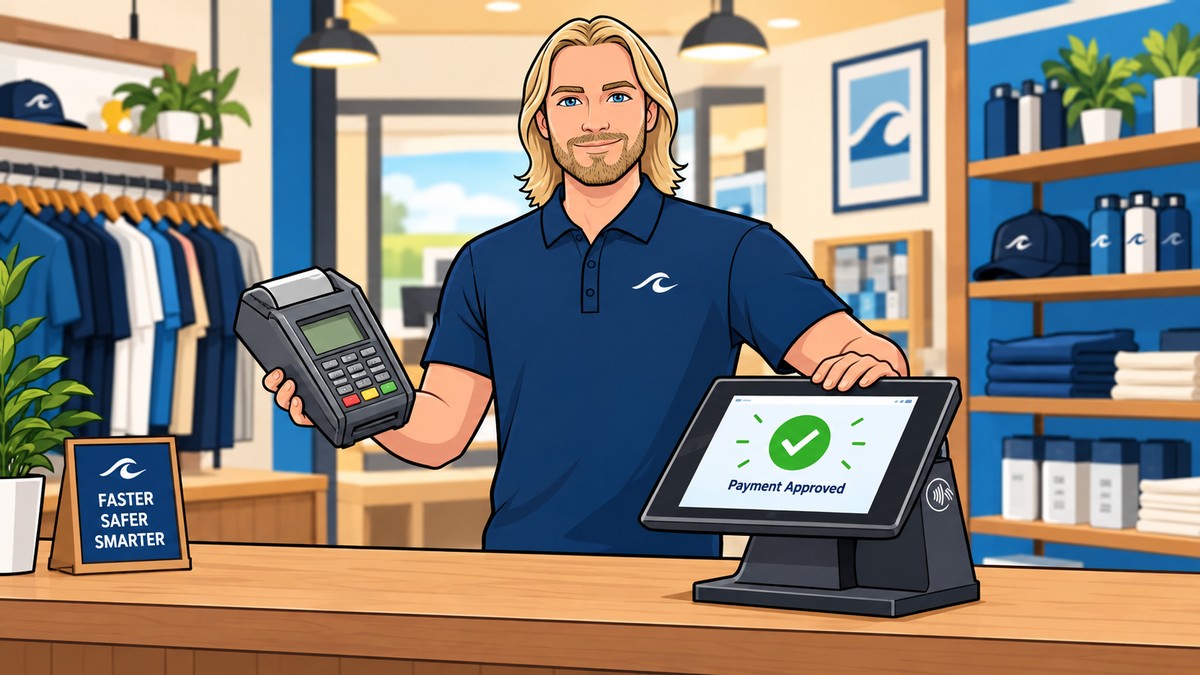
Your hardware is the physical link between your customer's wallet and your bank account. Modern online payment services for small businesses should offer a variety of hardware options. For retail shops, a full Point of Sale (POS) system with inventory management and employee tracking is essential. For service-based businesses, a simple handheld smart terminal or a mobile card reader may be enough.
When choosing hardware, look for EMV chip technology and NFC (Near Field Communication) for tap-to-pay options like Apple Pay and Google Pay. Contactless payments are no longer a luxury; they are a customer expectation. Ensure your terminal is PCI compliant and uses point-to-point encryption to protect your customers' sensitive data from hackers. High-quality hardware also reduces the risk of technical errors that lead to frustrated customers and lost sales.
Dealing with Chargebacks and Security
Chargebacks occur when a customer disputes a charge with their bank instead of asking you for a refund. They are a major headache for small businesses because they often result in lost inventory plus a hefty fee from the processor. Online payment services for small businesses should provide you with tools to fight these disputes. This includes keeping digital receipts, tracking shipping information, and using 3D Secure for online transactions.
Security is equally important. PCI (Payment Card Industry) compliance is a set of security standards designed to ensure that all companies that accept, process, store, or transmit credit card information maintain a secure environment. Your processor should help you navigate the annual PCI self-assessment questionnaire. If they charge you a monthly "non-compliance fee" without helping you become compliant, it is time to find a new partner.
Conclusion: Finding the Right Partner
Selecting the right online payment services for small businesses is about balancing cost, features, and reliability. Don't be swayed by "free" equipment offers that hide high rates in the fine print. Instead, look for a partner that offers transparent pricing, local support, and the flexibility to grow with your business. Remember to review our guide on the best online merchant services for small business to see how different providers stack up in the real world. By taking the time to audit your statements and understand your fee structure today, you can secure your business's financial health for years to come.
Ready to see your own numbers?
Run your real card volume through the calculator or apply in about two minutes.