
Fees & Rates
Free Credit Card Processing for Small Business Online
Tired of losing 3% of every sale to the bank? Discover how your small business can eliminate online processing fees using legally compliant surcharging and dual-pricing models.
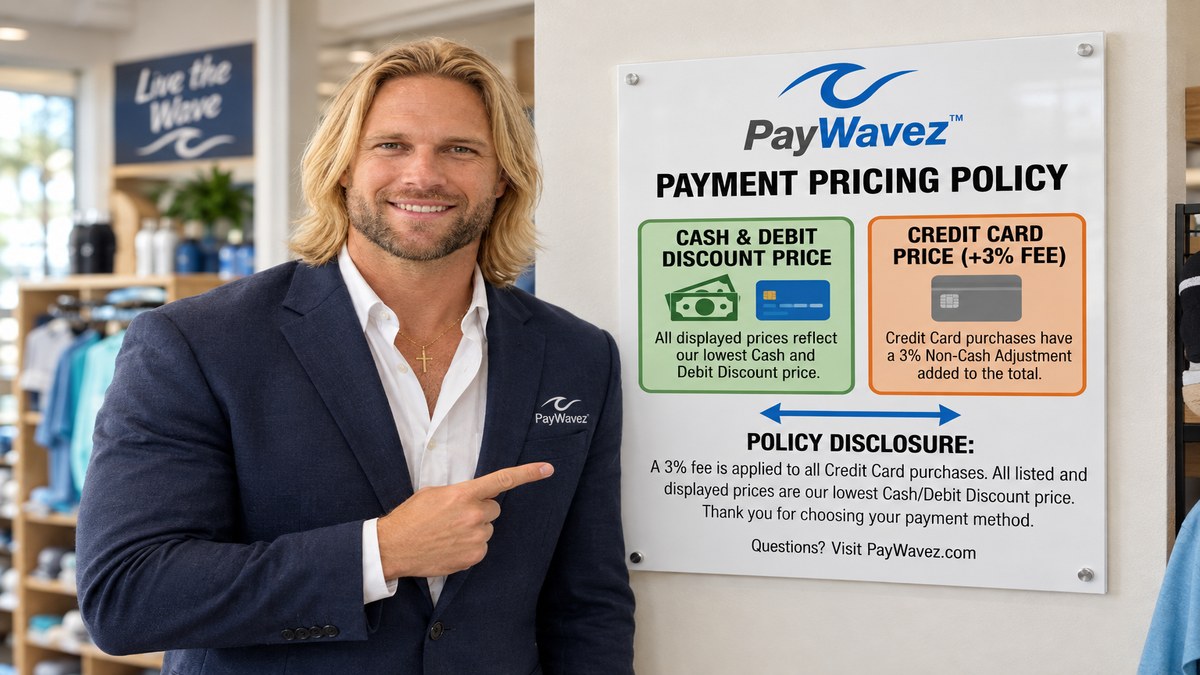
Free credit card processing for small business online is the goal of every merchant tired of seeing 3% or more of their revenue disappear every month. For years, small business owners accepted credit card fees as an unavoidable cost of doing business. You would sell a product for $100, but only see $96.50 hit your bank account after the processor took their cut. In 2026, that dynamic has changed. By using surcharging and dual-pricing programs, you can effectively move the cost of the transaction from your bottom line to the customer who chooses the convenience of credit. This guide explains how to set up these programs legally and technically so you can keep 100% of your sticker price.
How "Free" Processing Actually Works for Online Sellers
When people talk about free credit card processing for small business online, they are usually referring to a merchant account set up for surcharging or dual pricing. In a traditional model, the merchant pays the interchange fees, assessment fees, and processor markups. In a zero-fee model, the payment gateway automatically adds a small percentage (usually around 3% to 4%) to the total at checkout if the customer pays with a credit card. This fee covers the processing costs, meaning the merchant receives the full original amount of the sale.
It is important to distinguish between surcharging and dual pricing. Surcharging is the act of adding a fee specifically to credit card transactions. Dual pricing is a slightly different approach where you list two prices for every item: a "cash" price (which can include debit cards) and a "card" price. For online businesses, surcharging is the most common way to achieve zero-cost processing. The software handles the math at the moment of checkout, ensuring the math is accurate and the disclosure is clear to the buyer.
A small business processing $50,000 a month in online sales can save over $18,000 per year by switching from a traditional 3% flat-rate model to a zero-fee surcharging program.
The Legal Rules for Online Surcharging
Before you jump into free credit card processing for small business online, you must understand the rules set by card brands like Visa and Mastercard, as well as state laws. As of 2026, surcharging is legal in the vast majority of U.S. states. However, there are strict requirements you must follow to stay compliant. First, you cannot surcharge debit cards. Even if a customer runs their debit card as "credit" on your website, you are legally prohibited from adding a surcharge to that transaction. This is a common mistake that can lead to heavy fines or the loss of your merchant account.
Second, you must provide clear disclosure. Customers must be notified that a surcharge is being applied before they complete the transaction. Your online checkout page needs to show the surcharge as a separate line item. You also have to register with the card brands at least 30 days before you start surcharging. Working with a partner like PayWavez simplifies this because our systems are built to handle these disclosures automatically. If you are looking for localized support, you can check our Alabama payment processing hub for state-specific guidance.
Benefits of Free Credit Card Processing for Small Business Online
The most obvious benefit of free credit card processing for small business online is the immediate increase in profit margins. For businesses with low margins, such as grocery delivery or wholesale supplies, a 3% fee can represent half of their actual profit. By eliminating that fee, you effectively give yourself a 3% raise overnight. This extra capital can be reinvested into marketing, inventory, or hiring new staff.
Beyond the money, zero-fee processing provides price stability. When card brands raise their interchange rates, merchants on traditional plans see their costs go up. Merchants on a surcharge plan are protected because the surcharge scales with the costs. You no longer have to worry about a surprise increase in your monthly merchant statement. This predictability is vital for long-term financial planning in a small business. If you want to see how this looks in action, you can view our live demo to see the checkout experience.
"The shift toward fee-passing is no longer a niche strategy; it’s a survival tactic for small businesses facing rising inflation and tightening margins."

Setting Up Your Online Merchant Account
To accept payments online, you need a merchant account and a payment gateway. The merchant account is where the funds are held before being deposited into your business bank account. The gateway is the "digital terminal" that securely sends card data from your website to the processor. When setting up for zero-fee processing, your gateway must be specifically configured to calculate and apply surcharges in real-time.
Many "big name" processors make it difficult to set up surcharging because they make more money when you pay the fees yourself. You need a processor that specializes in transparent pricing and small business needs. For businesses in the Southeast, working with a local expert can make the transition smoother. For example, our team provides dedicated support for Pensacola credit card processing to help Florida Panhandle businesses navigate these changes without any downtime.
Managing Chargebacks and Security
Even with free processing, you still have to deal with the reality of chargebacks. A chargeback happens when a customer disputes a charge with their bank. In the online world, these are more common than in face-to-face retail. When a chargeback occurs, the bank pulls the funds back from your account, and you are often charged a fee by the processor. To protect your business, you must use a gateway that includes fraud protection tools like 3D Secure and Address Verification Service (AVS).
Security is also paramount. Your online store must be PCI compliant, which means you follow the Payment Card Industry Data Security Standard. Most modern gateways handle the heavy lifting of PCI compliance by ensuring that sensitive card data never actually touches your server. Instead, the data is "tokenized" and sent directly to the secure vault of the processor. This reduces your liability and keeps your customers' information safe from hackers.
Integration with Your Website and POS
Integrating free credit card processing for small business online shouldn't require a computer science degree. Most small businesses use platforms like Shopify, WooCommerce, or Magento. Your payment provider should offer plugins or simple API integrations that connect your store to the zero-fee gateway. Once connected, the system will automatically detect the card type and apply the appropriate surcharge during the checkout process.
If you also have a physical location, you want a system that syncs your online and in-person sales. Using a smart terminal or a Point of Sale (POS) system that supports dual pricing across all channels ensures a consistent experience for your customers. Whether they buy from their phone or walk into your shop, the pricing logic remains the same. This unified approach makes accounting much easier at the end of the month.
Ready to see your own numbers?
Run your real card volume through the calculator or apply in about two minutes.