
Merchant Services
Small Business Payment Services: The Complete Guide for 2026
Choosing the right way to accept credit cards shouldn't be a guessing game. We break down how small business payment services work, from hidden fees to the best hardware for your Gulf Coast business.
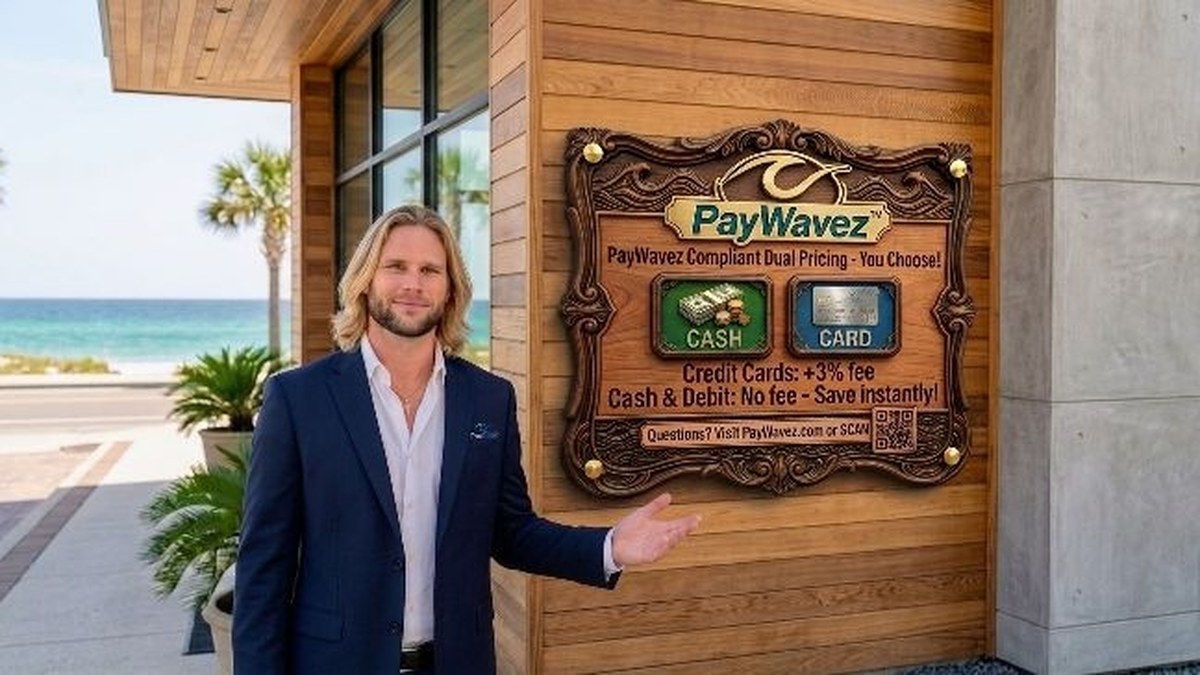
Small business payment services are the backbone of any modern storefront or service business in the United States, allowing you to accept credit cards, debit cards, and mobile wallets with ease. However, for many owners, the world of merchant accounts and processing fees feels like a maze of fine print and hidden costs. Before you sign a long-term contract, it is vital to understand what you are paying for and how to keep more of your hard-earned revenue. If you are looking for a deeper dive into specific providers, be sure to check out our detailed analysis of the best merchant services for small business to see how the top names compare.
What Are Small Business Payment Services?
At its simplest, these services provide the infrastructure needed to move money from a customer's bank account to yours. When a customer taps their phone or swipes a card, a complex chain of events begins. The payment processor sends the data to the card brand (like Visa or Mastercard), which then asks the customer's bank for approval. Once approved, the funds are eventually settled into your business bank account.
For most local shops, this involves three main components: a merchant account, a payment gateway for online sales, and physical hardware like a credit card terminal or a Point of Sale (POS) system. While some companies offer these as separate pieces, modern providers often bundle them together to make things simpler for the business owner. Whether you are running a boutique in Pensacola or a service business across the Alabama Gulf Coast, having a reliable setup is non-negotiable.
According to industry data, the average small business pays between 2.5% and 3.5% in total credit card processing fees, but those utilizing dual-pricing or surcharging programs can reduce their out-of-pocket costs to nearly zero.
Choosing the Right Small Business Payment Services for Your Industry
Not all businesses have the same needs. A high-volume coffee shop needs a fast, durable POS system that can handle hundreds of transactions an hour. A mobile plumber might only need a simple card reader that plugs into a smartphone. When evaluating services, look for a partner that understands your specific vertical. For example, restaurants have unique needs like tip tracking and split-check capabilities, while retail stores need robust inventory management.
Many owners start with "big name" flat-rate processors because they are easy to set up. However, as your business grows, those flat rates often become the most expensive option. Moving to an interchange-plus pricing model or a dual-pricing program can save you thousands of dollars a year as your volume increases. You can see how this works in real-time by viewing our live demo of modern payment hardware.
"The biggest mistake small business owners make is choosing a processor based on the free hardware offer rather than the long-term cost of the processing fees."
Understanding Merchant Account Fees and Hidden Costs
The total cost of accepting cards is often called your "effective rate." This includes interchange fees (which go to the banks), assessment fees (which go to the card brands), and the processor's markup. Some providers hide their markup in complex "tiered pricing" structures where transactions are labeled as qualified, mid-qualified, or non-qualified. This is almost always a bad deal for the merchant because the processor can move transactions into higher-cost tiers at their discretion.
Common hidden fees to watch out for include:
- PCI Compliance Fees: Some companies charge monthly or annual fees just to ensure you are following security standards.
- Monthly Minimums: If you don't process a certain amount, you get charged an extra fee.
- Statement Fees: A charge just to receive a digital copy of your monthly activity.
- Batch Header Fees: A small fee every time you close out your terminal for the day.

Surcharging and Cash Discounting Rules
One of the most effective ways to lower your costs is through surcharging or cash discount programs. Surcharging allows you to pass the cost of the credit card processing fee directly to the customer who chooses to pay with plastic. In the US, there are specific rules you must follow, such as displaying clear signage at the entrance and at the register. You also cannot surcharge debit cards; it only applies to credit cards.
Dual pricing is an even more transparent method. This is where your POS displays two prices for every item: a card price and a slightly lower cash price. This rewards customers for using cash while ensuring your business doesn't lose its margin to bank fees. It is a legal and increasingly popular way for small businesses to combat rising inflation and operating costs.
Protecting Your Business from Chargebacks
A chargeback happens when a customer disputes a charge with their bank instead of asking you for a refund. This can happen due to fraud, but often it is just "friendly fraud" where a customer forgets a purchase or a family member uses the card without permission. Small business payment services should provide you with tools to fight these disputes.
To minimize chargebacks, always use EMV chip-enabled terminals. If you swipe a chip card instead of dipping it, you lose the "liability shift," meaning you are responsible for the fraud rather than the bank. Keeping clear records and having a recognizable name on the customer's bank statement also goes a long way in preventing unnecessary disputes.
Hardware: Terminals vs. Full POS Systems
Do you need a simple terminal or a full Point of Sale system? A terminal just takes payments. A POS system manages your whole business. Modern "smart terminals" offer a middle ground, providing a touch screen and basic reporting without the high cost of a full POS setup. When selecting hardware, ensure it supports contactless payments (NFC) like Apple Pay and Google Pay, as more customers prefer these fast, secure methods.
Conclusion: Finding the Best Path Forward
Navigating the world of small business payment services requires a bit of homework, but the savings are well worth the effort. By focusing on transparent pricing, avoiding long-term contracts with heavy cancellation fees, and considering modern options like dual pricing, you can protect your bottom line. Always remember to read the fine print on your merchant statement every month to ensure no new fees have crept in. For a comprehensive look at the market, revisit our guide on the best merchant services for small business to find the perfect fit for your goals.
Ready to see your own numbers?
Run your real card volume through the calculator or apply in about two minutes.