
Fees & Rates
mcc merchant category code: What Every Merchant Needs to Know
Your MCC determines how much you pay in interchange fees and whether you can legally surcharge customers.
An mcc merchant category code is a four-digit number assigned to a business by credit card issuers to classify the type of goods or services that business provides. While it might seem like a minor administrative detail, this code is actually one of the most important factors in determining your credit card processing costs. If you are just starting to research this topic, you should also read our foundational guide on how a merchant category code explained works to get the basics down before diving into the advanced implications for your business.
What is an mcc merchant category code?
The MCC system was originally developed by the IRS in 2004 as a way to simplify 1099-K reporting, but it has since become the universal language of the payments industry. Every time a customer swipes a card at your business, your MCC is transmitted along with the transaction data. This code tells the card-issuing bank (the customer's bank) exactly what kind of business they are dealing with. For example, a grocery store usually has an MCC of 5411, while a full-service restaurant typically uses 5812.
For small business owners, especially those looking for Mobile credit card processing solutions, knowing your code is vital. It dictates the "interchange" rate, which is the non-negotiable fee set by Visa and Mastercard. If your business is classified incorrectly, you could be paying significantly more than your neighbors for the exact same transaction volume.
How MCCs Impact Your Processing Rates
The primary reason you should care about your MCC is your bottom line. Card networks view different industries as having different levels of risk. A professional service provider, like a lawyer or accountant, is viewed as lower risk than a high-volume retail shop or a seasonal tourist business. Consequently, the interchange rates assigned to those low-risk MCCs are often lower.
When you look at your monthly merchant statement, you might see various "downgrades." Often, these downgrades happen because the data provided during the transaction doesn't match the requirements for your specific MCC. For businesses in the Alabama payment processing market, ensuring your terminal is programmed with the correct code is the first step toward lowering your effective rate. If you aren't sure if you're on the right code, you can see how our system handles different categories by viewing a live demo of our platform.
Industry audits suggest that up to 15% of small businesses are assigned an incorrect MCC, often leading to overpayment on interchange fees by as much as 0.40% to 0.60% per transaction.
The Difference Between Standard and High-Risk Codes
Not all MCCs are created equal. Some categories are flagged as "high-risk" by banks. This doesn't necessarily mean your business is doing anything wrong; it just means the industry as a whole has a higher rate of chargebacks or fraud. Examples include online gaming, adult entertainment, and certain types of high-ticket travel services.
If you are assigned a high-risk MCC, you will likely face higher processing fees, longer funding hold times, and more stringent reserve requirements. Conversely, "emerging markets" like utilities, education, and government entities often enjoy special, lower-than-average interchange rates. Knowing where you fall on this spectrum allows you to negotiate better terms with your processor or at least understand why your rates are set the way they are.
Your MCC is the DNA of your merchant account; if it is misaligned with your actual business model, you are essentially paying a tax on a risk profile that doesn't belong to you.

MCCs and Surcharging Rules for Small Businesses
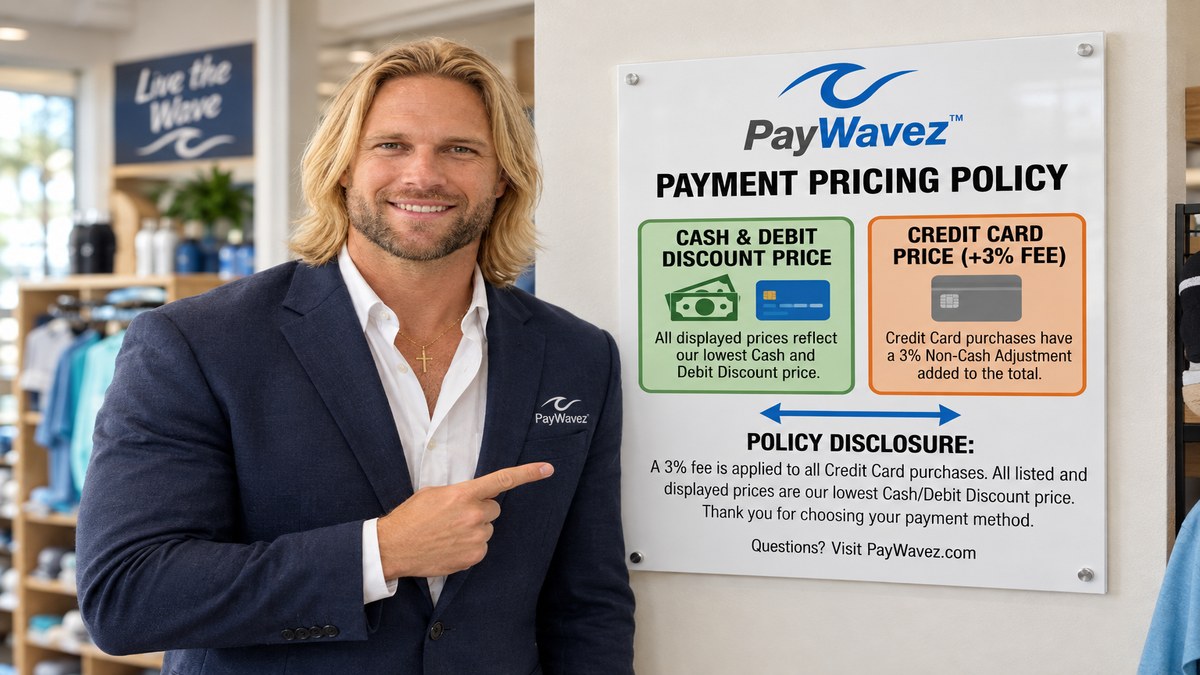
If you use a surcharging or dual-pricing program to offset your credit card fees, your MCC plays a legal role. Certain codes are prohibited from surcharging in specific states or under specific card brand rules. For example, in many jurisdictions, government agencies and educational institutions have different rules regarding "convenience fees" versus "surcharges."
Furthermore, some MCCs are eligible for "Level 2" or "Level 3" processing. This is common in B2B (business-to-business) transactions. If your MCC qualifies and you provide extra data like tax IDs and invoice numbers, the card brands will lower the interchange rate significantly. If your business sells to other businesses but you are using a standard retail MCC, you are leaving money on the table every single day.
How to Find Your Business's MCC
You won't usually find your MCC printed on your credit card terminal or your front door, but it is easy to find if you know where to look. The most common place is your monthly merchant statement. Look for a section labeled "Merchant Information" or "Account Summary." It is usually a four-digit number listed near your Merchant ID (MID).
If it isn't on your statement, you can call your current processor and ask. You can also look up your business on various "MCC lookup" tools online, though these aren't always 100% accurate because they rely on crowdsourced data from consumer banking apps. The only code that matters is the one your processor has on file for you.
Correcting a Misclassified Business Code
If you discover that your business is classified under the wrong MCC, you need to act quickly. Changing a code isn't as simple as flipping a switch; it usually requires a formal request to your processor and, in some cases, a new merchant application. This is because a change in MCC represents a change in the risk profile of your account.
When you contact your processor, be prepared to provide documentation about what you actually sell. This might include your website URL, marketing materials, or a business license. If your current processor refuses to change a clearly incorrect code, it may be a sign that they are profiting from the higher interchange rates you are paying. In that case, switching to a transparent provider is often the only solution.
Why MCCs Matter for Customer Rewards
While you care about the MCC because of fees, your customers care about it because of rewards. Many credit cards offer 3% back on "dining" or 5% back on "office supplies." These rewards are triggered entirely by your MCC. If your cafe is accidentally coded as a "bakery" (MCC 5462) instead of a "restaurant" (MCC 5812), a customer using a dining rewards card might not get their points.
This can lead to customer dissatisfaction and even complaints. We have seen cases where regular customers stopped visiting a local shop because they realized they weren't earning their expected travel miles there. Ensuring your code is correct isn't just about saving money; it's about maintaining a good relationship with your most loyal, card-carrying customers.
In summary, your mcc merchant category code is the foundation of your merchant account's pricing structure. It affects everything from your base interchange costs to your eligibility for B2B discounts and your legal ability to pass fees to customers. By taking the time to verify your code and ensuring it matches your actual business activities, you can protect your margins and ensure your customers are happy. For more details on the technical side of this classification, refer back to our article on merchant category code explained for a deep dive into the history and structure of these identifiers.
Ready to see your own numbers?
Run your real card volume through the calculator or apply in about two minutes.