
Accepting Payments
How to Pay Merchant Using Credit Card: A Small Business Guide
Understanding the mechanics of how a customer pays a merchant via credit card is essential for any business owner looking to streamline operations and reduce overhead costs.
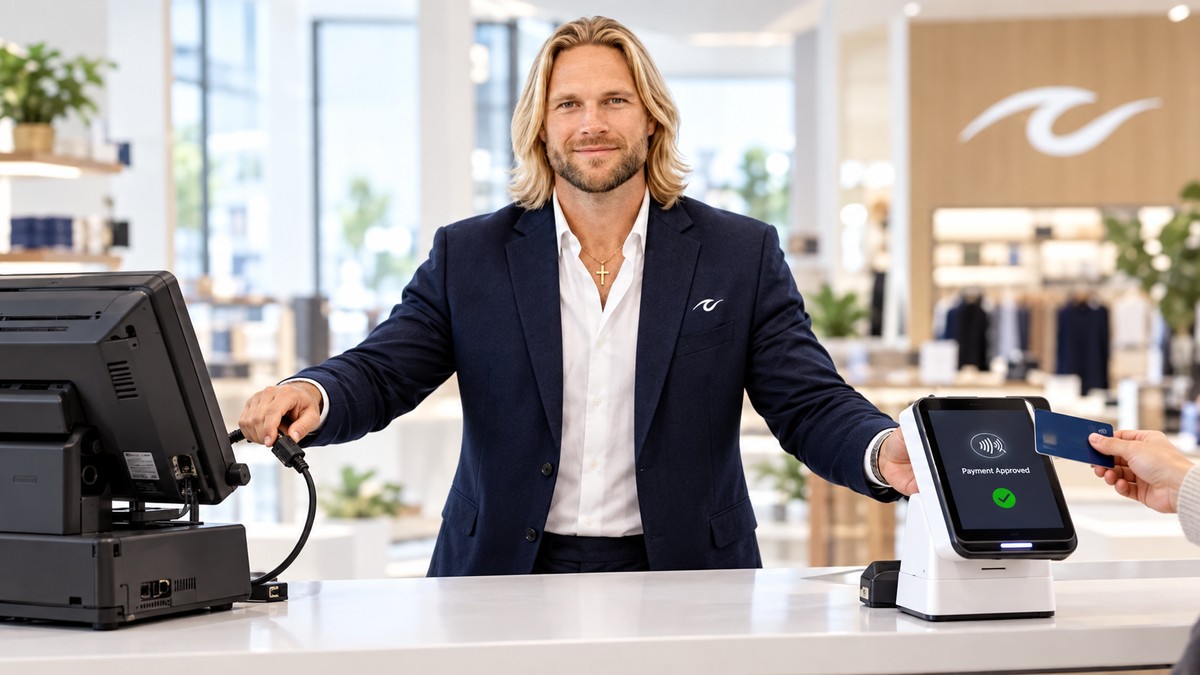
How to pay merchant using credit card is the fundamental question at the heart of the modern economy. For a customer, it is a simple matter of tapping a phone or swiping a piece of plastic. For you, the small business owner, it is a multi-step process involving gateways, processors, card brands, and issuing banks. To successfully accept these payments, you must have the right infrastructure in place to ensure every transaction is secure, fast, and cost-effective.
The Mechanics of a Credit Card Transaction
When a customer initiates a payment, the process happens in seconds, but it involves several distinct stages. First is authorization. This is where the merchant’s Point of Sale (POS) system sends a request through a payment gateway to the processor. The processor then contacts the card brand (like Visa or Mastercard), which asks the customer’s bank if they have enough credit to cover the purchase. If the bank says yes, an authorization code is sent back, and the sale is approved.
The second stage is capture. This happens when you "close out" or batch your transactions at the end of the day. Finally, settlement occurs when the funds are actually moved from the customer’s bank account to your merchant account. This usually takes one to two business days, depending on your processor’s funding schedule. Understanding this flow helps you troubleshoot why a payment might be declined or why your deposits might be delayed.
Hardware Options: How to Pay Merchant Using Credit Card at the Counter
For brick-and-mortar businesses, the physical hardware is the primary interface for sales. There are several ways to facilitate these payments depending on your business model. Traditional countertop terminals are the workhorse of the industry, connecting via Ethernet or Wi-Fi to process dipped (EMV) or swiped (MSR) cards. These are ideal for retail shops or service providers with a fixed checkout counter.
Mobile card readers have become increasingly popular for businesses on the move, such as food trucks or mobile detailing services. These devices often plug into a smartphone or tablet, allowing you to accept payments anywhere you have a data connection. For a more integrated experience, a full POS system like Clover or a specialized PayWavez solution can manage inventory, staff hours, and customer loyalty programs alongside payment processing. You can see these systems in action by viewing our live demo.
According to recent industry data, over 80% of consumers prefer using a card or digital wallet over cash, making it vital for small businesses to offer diverse payment options to avoid losing sales.
The Role of the Merchant Account
You cannot simply accept credit cards through a standard personal bank account. You need a merchant account, which acts as a holding pen for your funds before they are deposited into your business checking account. When you apply for a merchant account, the processor looks at your credit history, your industry risk level, and your expected monthly volume. This is why some businesses are labeled "high risk" and may face higher fees or stricter reserve requirements.
Choosing the right merchant account provider is one of the most important financial decisions you will make. Some providers offer flat-rate pricing, which is easy to understand but often more expensive for high-volume businesses. Others offer Interchange-Plus pricing, which is more transparent and usually results in lower overall costs because you pay the actual cost of the transaction plus a small, fixed markup.
The easier it is for a customer to pay, the faster your business grows. Modern payment technology removes the friction between a customer's desire and your revenue.

Processing Fees: What It Costs You to Get Paid
Every time a customer uses a card, you pay a fee. These fees are generally broken down into three categories: interchange fees, assessment fees, and processor markups. Interchange fees are set by the card brands and go to the issuing bank; these are non-negotiable. Assessment fees also go to the card brands. The only part you can negotiate is the processor markup.
Small business owners often get frustrated by "hidden fees" like PCI compliance fees, statement fees, or monthly minimums. At PayWavez, we believe in transparency. It is important to look at your "effective rate"—the total fees paid divided by your total sales volume—to understand exactly what you are paying. If your effective rate is consistently above 3% or 4%, you are likely overpaying and should consider a statement audit.
Surcharging and Dual Pricing: Passing the Cost Along
One way to combat rising processing fees is through surcharging or dual pricing programs. A surcharge is a small fee (usually around 3% to 4%) added to a credit card transaction to cover the cost of processing. This allows you to keep 100% of your sticker price. However, there are strict rules: you must notify the card brands 30 days in advance, you cannot surcharge debit cards, and you must have specific signage at your entrance and at the point of sale.
Dual pricing is a slightly different approach where you offer a "cash price" and a "card price." This is often easier to implement and is legal in all 50 states. It provides transparency to the customer while protecting your profit margins. Many businesses along the Gulf Coast use these programs to manage the high costs of seasonal merchant services.
Preventing Chargebacks During the Payment Process
A chargeback occurs when a customer disputes a charge with their bank instead of asking you for a refund. This can happen due to fraud, but it also happens because of "friendly fraud"—where a customer forgets a purchase or doesn't recognize the business name on their statement. Chargebacks are costly because you lose the sale amount, the inventory, and you are hit with a fee (usually $25 to $50).
To prevent chargebacks, ensure your business name on the credit card statement is recognizable. Always use EMV chip readers, as swiping a chip card shifts the liability for fraud onto the merchant. Additionally, providing excellent customer service and easy refund policies can encourage customers to come to you first rather than their bank.
Why Local Support Matters for Alabama Small Businesses
For business owners in the Southeast, having a local partner can make a world of difference. If your terminal goes down on a busy Saturday night, calling a 1-800 number and waiting on hold for an hour is not an option. Working with a provider that understands the local economy—from the tourist rushes in Gulf Shores to the professional services in Mobile—ensures you get the support you need when it matters most.
We specialize in Alabama payment processing, helping local shops, restaurants, and contractors find the right balance between technology and cost. Whether you are looking for Mobile credit card processing or a fixed retail setup, we provide the boots-on-the-ground service that national processors simply cannot match.
Ready to see your own numbers?
Run your real card volume through the calculator or apply in about two minutes.