
Fees & Rates
How Much Are Merchant Credit Card Fees? A 2026 Small Business Guide
Understanding the true cost of accepting card payments is the first step toward reclaiming your profit margins and choosing the right partner for your business.

How much are merchant credit card fees is the question every small business owner asks when they look at their monthly processing statement and see a chunk of their revenue missing. For most merchants in the United States, these costs are not just a single line item but a complex web of different charges from banks, card brands, and technology providers. In today’s economy, where every penny counts, knowing exactly what you are paying—and why—can be the difference between a profitable year and a struggling one.
The Three Main Components of Your Processing Rate
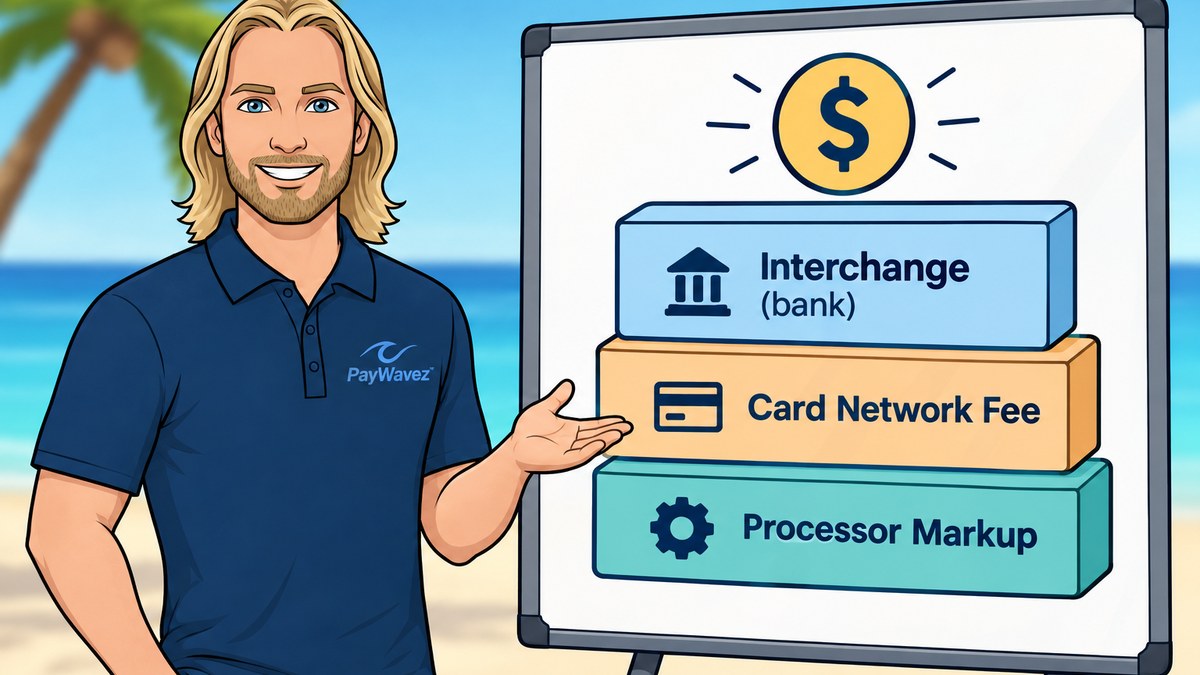
To understand the total cost, you have to look at the three players involved in every swipe, dip, or tap. First is the interchange fee. This is the largest portion of the cost and goes directly to the bank that issued the customer’s card (like Chase or Wells Fargo). These rates are set by Visa and Mastercard and are non-negotiable for everyone, from the smallest coffee shop to the largest retailer.
Second are the assessment fees. These are paid directly to the card networks themselves (Visa, Mastercard, Discover, and Amex). They are usually very small percentages, often less than 0.15%, but they apply to every transaction you process. Finally, there is the processor markup. This is the fee you pay to your merchant services provider for the service of routing the payment and providing you with equipment. This is the only part of the fee structure that is truly negotiable.
According to industry data, the average all-in credit card processing cost for U.S. small businesses typically ranges from 1.5% to 3.5% of the total transaction volume.
How Much Are Merchant Credit Card Fees for Small Businesses?
When looking at how much are merchant credit card fees for your specific business, the answer depends heavily on your industry and how you take payments. If you are a retail store in Destin taking cards in person, your rates will generally be lower than an e-commerce business taking orders over the phone or online. This is because "card-present" transactions are considered lower risk for fraud.
Debit cards are almost always cheaper to process than credit cards because of federal regulations like the Durbin Amendment, which caps the interchange on debit cards issued by large banks. On the other hand, premium rewards cards or corporate cards often carry much higher fees because the banks use those fees to pay for the cardholder's travel points and cash-back perks. As a merchant, you are essentially subsidizing your customer's rewards program.
Flat-Rate vs. Interchange-Plus Pricing
Many popular processors use a flat-rate model, charging something like 2.9% + $0.30 for every transaction. While this is simple to understand, it is often the most expensive way to process payments. If you process a $100 transaction on a basic debit card that only costs 0.05% in interchange, a flat-rate processor keeps the massive difference as profit. Interchange-plus pricing, which PayWavez advocates for, passes the raw cost of the card through to you and adds a small, transparent markup. This usually results in significant savings for businesses processing over $5,000 per month.
Transparent pricing isn't just about lower rates; it's about knowing that your processor isn't profiting from your lack of information.
Equipment, Terminals, and POS Costs
Beyond the percentage taken from each sale, you must consider the hardware. A basic mobile card reader might be cheap or even free, but it often locks you into higher transaction rates. A full-scale Point of Sale (POS) system can cost anywhere from $500 to $2,000 per terminal. However, modern "Smart Terminals" offer more than just payment processing; they help with inventory, employee tracking, and customer loyalty programs.
For businesses looking for Alabama payment processing, it is important to choose hardware that can handle the local environment, such as outdoor-rated terminals for seasonal tourist spots or handheld devices for tableside ordering in restaurants. You can see how these systems look and feel by checking out our live demo of modern payment technology.
Hidden Fees and Monthly Service Charges
When calculating how much are merchant credit card fees, don't forget the "junk fees" that many processors hide in the fine print. These can include monthly statement fees, PCI compliance fees (which should be included), and minimum processing fees if you don't hit a certain volume. Some providers even charge a "PCI Non-Compliance Fee" if you haven't filled out a simple annual survey, which can be as high as $40 per month.
Another significant cost to watch for is the chargeback fee. If a customer disputes a charge, your processor will likely charge you a fee ranging from $15 to $50, regardless of whether you win the dispute. Keeping your chargeback ratio low is essential for maintaining a healthy merchant account and keeping your overall costs down.
Surcharging and Dual Pricing: The Zero-Cost Solution
One of the fastest-growing trends for small businesses is the use of surcharging or dual pricing programs. These programs allow you to pass the cost of the credit card processing fee directly to the customer who chooses to use a credit card. Under a dual pricing model, you display a "Cash Price" and a "Card Price." If the customer pays with a card, the processing fee is covered by the higher price, effectively bringing your merchant fees down to near zero.
While this was once restricted, it is now legal in most states, provided you follow specific signage and disclosure rules. This strategy is particularly effective for high-ticket businesses or those with thin profit margins. It allows you to keep 100% of your listed price without losing 3% to the banks.
How to Lower Your Current Fees
If you feel you are overpaying, the first step is a statement audit. Look for your "effective rate," which is your total fees divided by your total sales volume. If that number is significantly higher than 3%, you are likely overpaying. You can often negotiate with your current provider by showing them a competing offer, or you can switch to a provider that offers more transparent pricing models.
Ready to see your own numbers?
Run your real card volume through the calculator or apply in about two minutes.