
Small Business Payments
Do Hair Salons Accept Credit Cards? A Guide for Salon Owners
Accepting plastic is no longer optional for modern beauty businesses, but managing the costs requires a strategic approach to merchant services.
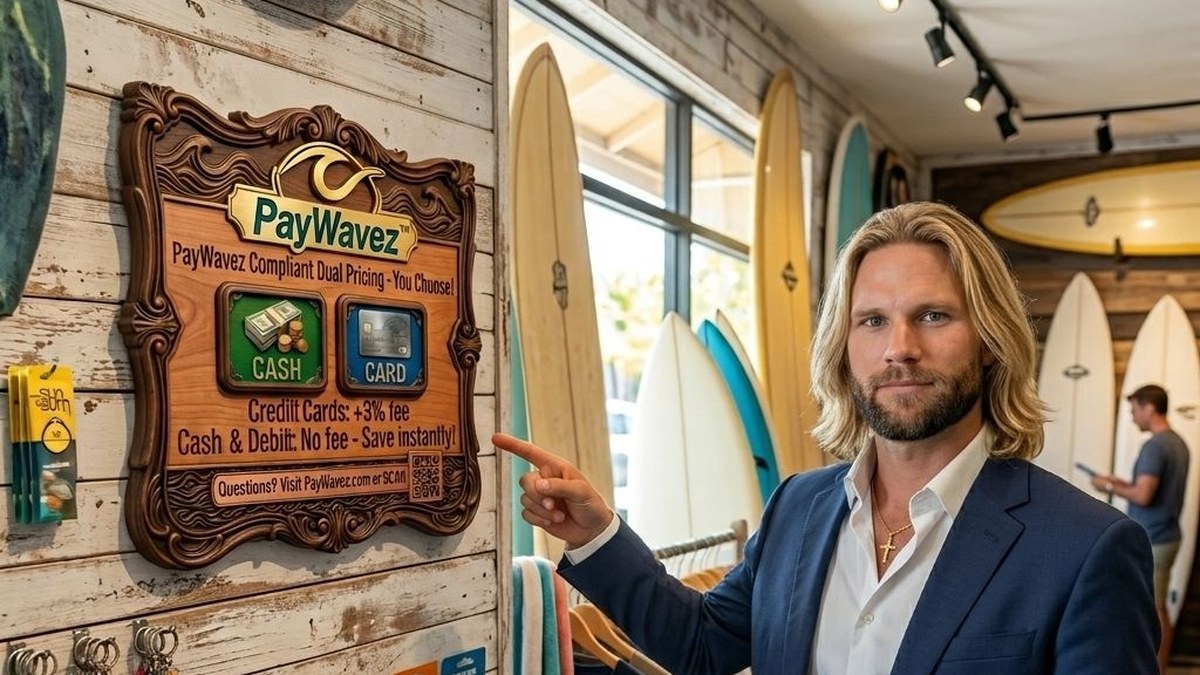
Do hair salons accept credit cards is a question that many first-time clients ask, but for a business owner, the answer involves much more than just saying "yes." In the modern beauty industry, accepting card payments is a fundamental requirement for growth, customer retention, and operational efficiency. While cash was once king in the barber shop and beauty parlor world, today’s consumers rarely carry enough paper currency to cover a high-end color service, a full set of extensions, or a premium product haul. If your salon isn't equipped to handle plastic, you are likely leaving thousands of dollars on the table every month.
Do Hair Salons Accept Credit Cards?
The short answer is that the vast majority of professional hair salons in the United States accept credit cards. From small independent booths to large multi-chair franchises, card acceptance has become the industry standard. However, simply having a card reader isn't enough. As a salon owner, you have to balance the convenience of your clients with the reality of merchant service fees. Every time a client swipes, dips, or taps their card, a small percentage of that transaction is taken by the banks and the processor. Over a year, these fees can eat into your margins significantly if you aren't using the right program.
For businesses in the Southeast, local support is often the key to getting these costs under control. Whether you are looking for Alabama payment processing or specialized services like Pensacola credit card processing, choosing a partner that understands the local economy and seasonal trends is vital. Modern salons are moving away from basic card readers and toward integrated Point of Sale (POS) systems that handle booking, inventory, and payments in one place.
Industry data shows that salon clients spend an average of 20% to 30% more per visit when paying with a credit card compared to cash, primarily due to the ease of adding retail products and higher tips.
Understanding the Cost of Card Acceptance
When you decide to accept credit cards, you enter the world of merchant accounts. There are several different pricing models you might encounter. The most common are flat-rate pricing, interchange-plus pricing, and tiered pricing. Flat-rate providers often appeal to new owners because they are simple, but they are usually the most expensive option as your volume grows. Interchange-plus is more transparent, showing you exactly what the card brands (Visa, Mastercard) charge versus what the processor keeps.
For many salon owners, the biggest frustration is the "invisible" cost. You might see a bill at the end of the month that is much higher than the percentage you were promised. This happens because of hidden fees like PCI compliance charges, statement fees, and non-qualified transaction rates. At PayWavez, we focus on transparency so you know exactly where every penny is going. You can even see how our systems work in action by viewing our live demo.
Surcharging and Dual Pricing for Salons
One of the fastest-growing trends in salon management is the use of surcharging or dual pricing programs. These programs allow salon owners to pass the cost of credit card processing directly to the customer or offer a discount for those who choose to pay with cash. In a high-margin service business like hair styling, this can save an owner $500 to $2,000 per month in fees.
Dual pricing is often the most "customer-friendly" version of this. You list two prices for every service: a card price and a lower cash price. This keeps you compliant with card brand rules and state laws while protecting your bottom line. It’s a great way to ensure that your stylists keep more of their hard-earned money without the salon owner having to absorb the rising costs of bank fees. However, it is important to have the right signage and a POS system that handles the math automatically at checkout.
"Your payment terminal is the last thing a client touches before they leave; make sure the experience is as seamless and professional as the haircut they just received."
Choosing the Right Salon POS and Terminals
The hardware you use matters just as much as the rates you pay. A modern salon needs more than just a terminal; it needs a system that can handle booth rentals, split commissions, and inventory tracking. If you have multiple stylists working as independent contractors, you need a system that can route payments to different bank accounts or at least generate detailed reports for end-of-week payouts.
Smart terminals, like the Clover or specialized salon systems, allow for contactless payments (Apple Pay/Google Pay), which are increasingly popular. They also allow for "tip prompting" on the screen. Statistics show that when a client is presented with suggested tip percentages (15%, 20%, 25%) on a digital screen, the average tip amount increases. This keeps your stylists happy and reduces the awkwardness of the checkout process.
Managing Tips and Gratuity on Plastic
Handling tips is one of the most complex parts of salon payment processing. When a client adds a tip to a credit card transaction, that money is deposited into the salon's bank account, not the stylist's pocket. You then have to pay that out to the stylist, which can create a headache for accounting and tax purposes. Some salons choose to pay out tips in cash at the end of the day, while others add them to the weekly paycheck.
You also have to consider the processing fee on the tip itself. If a client leaves a $20 tip on a card, the salon is still paying roughly 3% (or $0.60) to process that tip. Over hundreds of appointments, these small amounts add up. Some owners choose to deduct the processing fee from the stylist's tip, but you must check your local labor laws before implementing this policy. A transparent merchant service provider can help you set up reporting that makes this split easy to manage.
Preventing Chargebacks in the Beauty Industry
A chargeback occurs when a client disputes a charge with their bank, claiming they didn't authorize the service or weren't satisfied with the result. In the service industry, these can be difficult to fight because there is no physical product to return. To protect your salon, always use EMV (chip) readers rather than swiping the magnetic stripe. Swiping a chip card makes you liable for any fraud that occurs.
Additionally, keep detailed records of every appointment. Using a POS system that requires a digital signature and sends an email receipt can provide the evidence you need to win a dispute. If a client is unhappy with their hair, it is almost always better to offer a "fix-it" appointment for free than to risk a chargeback, which comes with extra fees from your processor regardless of whether you win or lose.
Conclusion: Making the Switch to Better Processing
Accepting credit cards is a necessity, but overpaying for the privilege is not. If you are currently using a high-fee, flat-rate provider, it might be time to look at a more tailored solution. By choosing a processor that understands the unique needs of hair salons—from booth rental management to dual pricing—you can turn your payment system from an expense into a strategic advantage. Focus on your craft, and let the right payment technology handle the rest.
Ready to see your own numbers?
Run your real card volume through the calculator or apply in about two minutes.