
Fees & Rates
Do Credit Cards Charge Conversion Fees?
When you use your credit card to buy something in a different currency, you might notice extra charges on your statement. These fees can come from your bank, the card network, or even the merchant themselves.

Yes, most credit cards charge fees when you make a purchase in a currency other than U.S. dollars. However, not all fees are the same. There are actually two different types of charges you might see: foreign transaction fees and currency conversion fees. Understanding the difference can save you a lot of money, especially if you travel often or buy products from international websites.
Foreign Transaction Fees vs. Currency Conversion Fees
It is easy to get these two mixed up, but they happen at different points in the payment process. A foreign transaction fee is charged by your credit card issuer (like your bank). It usually covers the cost of processing a payment that goes through a foreign bank or is made in a foreign currency. This fee is typically around 1% to 3% of the total purchase.
A currency conversion fee is a bit different. This happens when the merchant or an ATM offers to convert the price into U.S. dollars for you right at the checkout. This is often called Dynamic Currency Conversion (DCC). While it might seem helpful to see the price in dollars, the exchange rate is usually much worse than what your bank would give you. You are essentially paying for the convenience of seeing the price in your home currency.
How These Fees Are Calculated
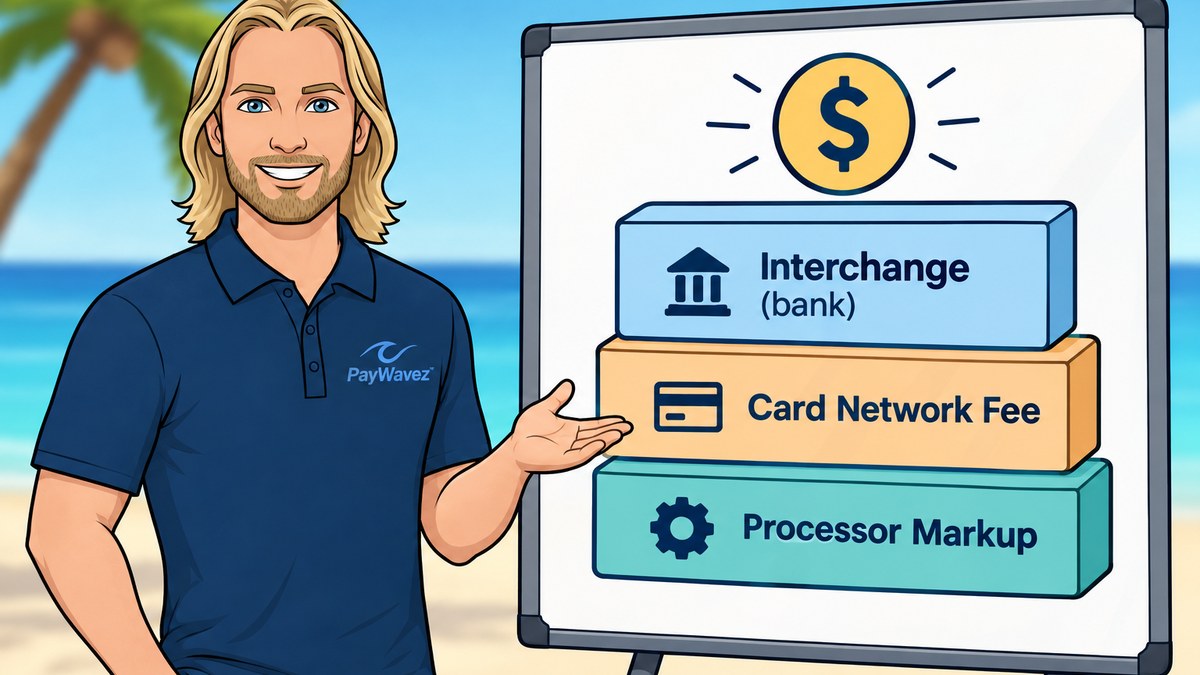
When you swipe your card in another country, the card network (like Visa or Mastercard) handles the exchange. They take the local price and turn it into dollars using a wholesale exchange rate. Then, your bank adds their percentage on top of that. If you are a business owner looking to understand how these costs impact your bottom line, using a Processing Fee Calculator can help you see how different rates affect your monthly totals.
Always choose to pay in the local currency. If a card reader asks if you want to pay in U.S. Dollars or the local currency, the local currency almost always results in a better deal.
How to Avoid Paying Extra
If you want to stop paying these fees, you have a few options. First, you can look for a credit card that specifically advertises "no foreign transaction fees." Many travel-focused cards offer this as a perk. This is the simplest way to save 3% on every purchase you make while abroad.
Second, always decline Dynamic Currency Conversion. If a waiter or a shopkeeper asks if you want the bill in dollars, say no. By paying in the local currency, you let your credit card network handle the conversion, which is almost always cheaper than the merchant's rate.
What This Means for Merchants
If you run a business in a tourist-heavy area, like our partners in Alabama, you might wonder how this affects your customers. Businesses in places like Gulf Shores often deal with international travelers. Providing a clear, transparent checkout experience helps build trust. At PayWavez, we believe in transparent pricing so you always know what you are paying and why. You can see our systems in action by visiting our live demo.
Ready to see your own numbers?
Run your real card volume through the calculator or apply in about two minutes.