
Fees & Rates
The Small Business Guide to Credit Card Processing Rates in 2026
Understanding your merchant statement shouldn't require a finance degree. This guide breaks down exactly what you pay per swipe and how to keep more of your revenue.
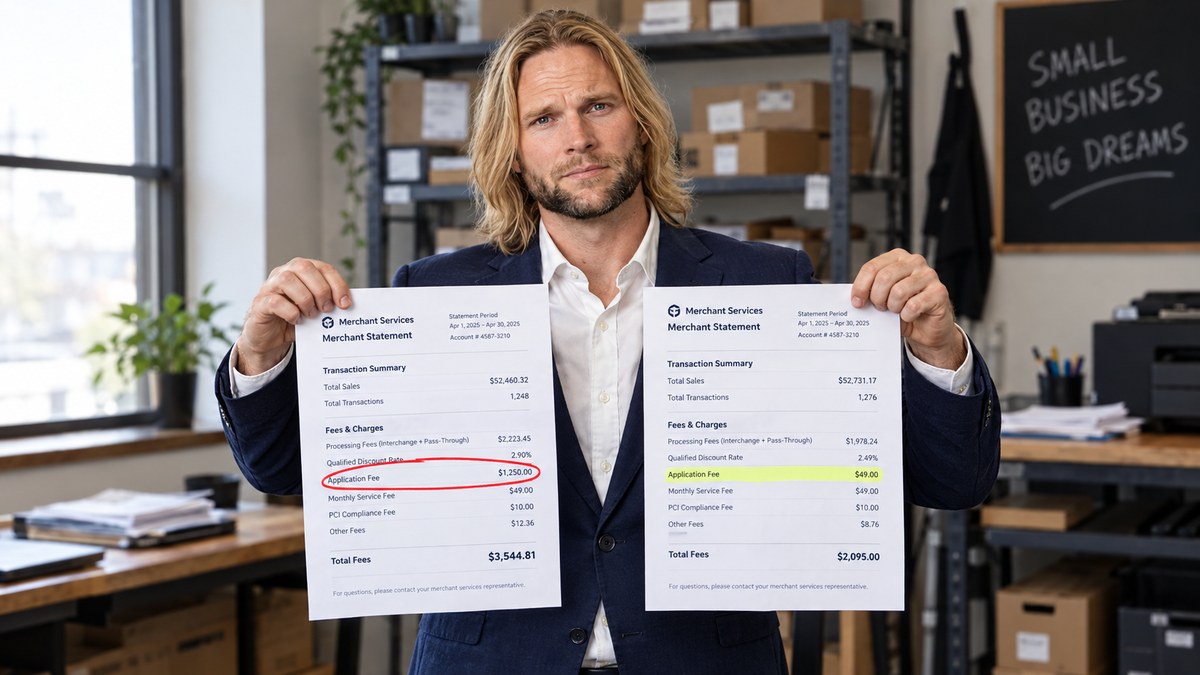
Credit card processing rates are often the single largest expense for small businesses after labor and rent. Every time a customer taps their phone or swipes a card, a small percentage of that sale vanishes before it ever hits your bank account. If you feel like you are losing too much to these fees, you are not alone. For a deeper dive into the specific dollar amounts you might see on your statement, check out our guide on how much card processing fees cost. Understanding the mechanics behind these numbers is the only way to ensure you aren't being overcharged by a provider taking advantage of complex industry jargon.
The Three Parts of Every Credit Card Rate
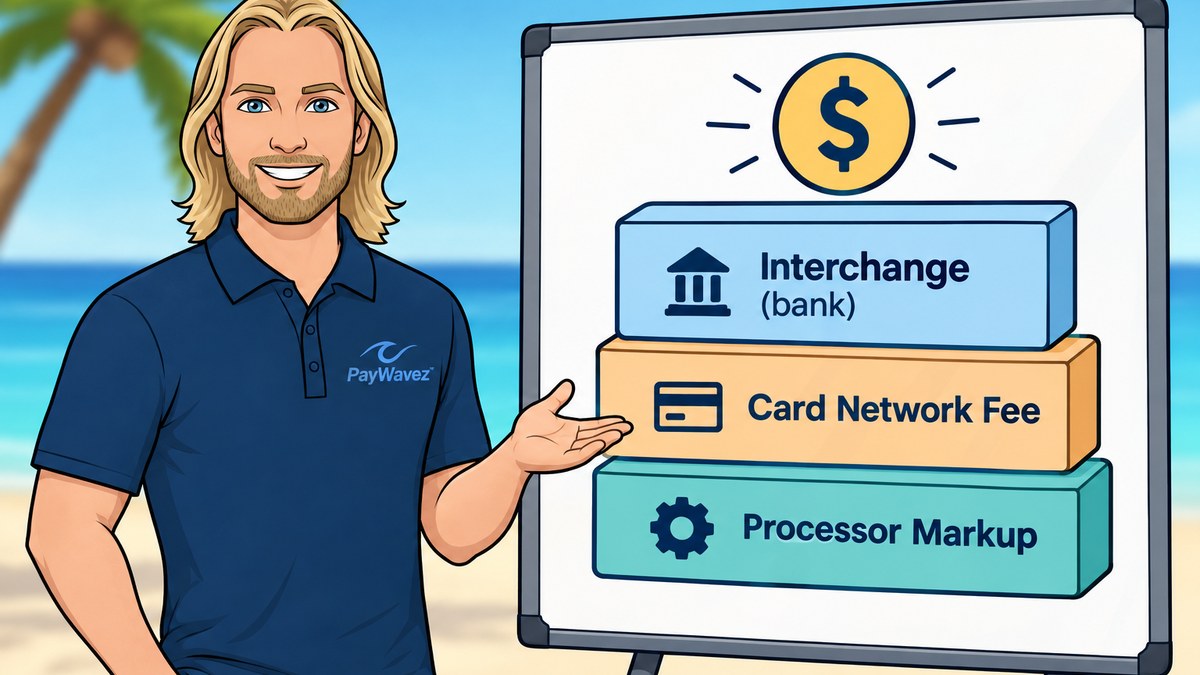
When you look at your monthly statement, the total percentage you pay is actually made up of three distinct layers. Most business owners think the processor keeps the whole fee, but that is rarely the case. The first layer is the interchange fee. This is the amount set by the card brands like Visa and Mastercard, and it goes directly to the bank that issued the customer's card. This rate is non-negotiable and is the same for every processor in the country.
The second layer consists of assessment fees. These are paid directly to the card brands themselves (the networks) for the privilege of using their payment rails. Like interchange, these are fixed and cannot be negotiated. The third layer is the processor markup. This is the only part of the credit card processing rates that is actually flexible. This is where your merchant services provider makes their profit and covers their operational costs, such as customer support and security monitoring.
Industry data shows that the average small business effective rate—the total fees divided by total sales—typically ranges from 2.5% to 3.5% depending on the industry and card types used.
Comparing Flat-Rate vs. Interchange-Plus Pricing
Most small businesses fall into one of two pricing models: Flat-Rate or Interchange-Plus. Flat-rate pricing is what you see with companies like Square or PayPal. You pay a single, predictable rate (like 2.6% + $0.10) for every transaction, regardless of the card type. While this is simple to understand, it is often the most expensive option for high-volume businesses because the processor keeps the difference when a low-cost debit card is used.
Interchange-plus pricing is much more transparent. In this model, the processor passes the raw interchange cost directly to you and adds a small, fixed markup (such as 0.20% + $0.10). This allows you to benefit from lower rates on debit cards and basic credit cards. While the statement might look more complicated, this model almost always results in lower total costs for businesses processing more than $5,000 per month. Whether you are running a boutique in Gulf Shores or a service business elsewhere in our Alabama payment processing network, choosing the right model is the first step to saving money.
Transparency in pricing isn't just a feature; it's a requirement for any business that wants to scale without leaking profit to hidden merchant fees.
Why Your Rates Might Be Higher Than Expected
Not all transactions are created equal. Several factors can cause your credit card processing rates to spike on specific sales. The biggest factor is card-not-present (CNP) transactions. When you take a payment over the phone or through an online checkout, the risk of fraud is higher. Because of this risk, banks charge a higher interchange fee. Similarly, corporate cards and high-tier rewards cards (like the ones that offer travel points) carry much higher interchange rates than a standard debit card.
Your Merchant Category Code (MCC) also plays a role. The card networks assign every business a code based on their industry. Some industries are labeled as "high risk" by banks, which leads to higher baseline rates. If your business is misclassified, you could be paying more than necessary on every single transaction. Regularly auditing your statement to ensure your MCC matches your actual business activity is a simple way to protect your margins.
Negotiating Better Credit Card Processing Rates for Your Business
Many business owners believe that their processing rates are set in stone once they sign a contract. This is a myth. Because the processor markup is the only part of the fee they control, you can and should negotiate this margin. If your business has grown in volume since you first signed up, you have leverage. Processors are often willing to shave off a few basis points to keep a loyal, high-volume customer from switching to a competitor.
When negotiating, focus on the "plus" part of your interchange-plus plan. Ask for a reduction in the per-transaction cent fee or the percentage markup. You should also look for "junk fees" that can be eliminated. Fees for "PCI non-compliance," "statement delivery," or "monthly minimums" are often negotiable or can be waived entirely if you ask. A transparent provider will be happy to explain each line item and work with you to find a fair rate that reflects your current business size.
The Power of Dual Pricing and Surcharging
One of the most effective ways to manage credit card processing rates is to stop paying them altogether. Dual pricing and surcharging programs allow businesses to pass the cost of processing onto the customers who choose the convenience of paying with plastic. In a dual pricing model, you display two prices: a cash price and a card price. The customer chooses which they prefer, and the business receives 100% of the cash price regardless of the method.
This has become a standard practice for many service-based businesses and restaurants. By implementing these programs legally and transparently, you can effectively reduce your processing costs to near zero. It is important to follow specific signage requirements to stay compliant with card brand rules, but the impact on your bottom line can be massive. For many merchants, this shift represents the difference between a struggling month and a profitable one.
Choosing the Right Terminals and POS Systems
The hardware you use to accept payments can also influence your long-term costs. While some processors offer "free" equipment, these often come with higher monthly fees or longer contract lock-ins that end up costing more than the hardware is worth. Investing in a modern smart terminal or a full Point of Sale (POS) system can help you track inventory, manage staff, and ensure you are using the most secure payment methods available.
Modern terminals support EMV chip cards and contactless "tap-to-pay" options like Apple Pay. These methods are not only faster but also more secure, which helps reduce the risk of expensive chargebacks. To see how these rates and hardware options look in a real-world checkout environment, check out our live demo. The right setup should make your life easier, not just take your money.
Conclusion: Taking Control of Your Fees
Managing your business finances is hard enough without worrying about fluctuating credit card processing rates. By understanding the difference between interchange and markup, choosing the right pricing model, and considering modern options like dual pricing, you can take control of your expenses. Don't let your merchant statement be a mystery that you just pay and ignore every month.
Remember that the lowest advertised rate isn't always the cheapest in reality. Always look at your effective rate to see the truth. For a final look at how these costs are structured and what you should expect to pay, revisit our guide on how much card processing fees cost. With the right knowledge and a transparent partner, you can ensure your business keeps every dollar it deserves.
Ready to see your own numbers?
Run your real card volume through the calculator or apply in about two minutes.