

No fee credit card processing, explained
No-fee credit card processing. Same terminal, lower bill.
This isn't PayWavez vs. Square or Clover — we sell and support both. This is about the pricing model underneath: the default merchant-paid rate most processors charge, versus PayWavez's self-service Surcharging and Dual Pricing programs, which bring your credit card processing cost down to $0. Pick your program, sign yourself up, and never sign a contract — no salesperson required at any step.
Let's be clear
We're not against Square or Clover — we sell them
PayWavez supports 2,000+ POS integrations, including Clover, Dejavoo, PAX, and Square-compatible hardware. If you love your terminal, keep it. What we're changing is who processes the transaction and what pricing model applies — not the hardware on your counter.
The default rate most merchants are on
What in-person card processing typically costs today
| Processor / plan | In-person rate | Monthly fee | Who pays the fee |
|---|---|---|---|
| Square — Free plan | 2.6% + $0.15 | $0/mo | Merchant |
| Square — Plus | 2.5% + $0.15 | $49/mo | Merchant |
| Square — Premium | 2.4% + $0.15 | $149/mo | Merchant |
| Clover | ~2.3%–2.6% + $0.10 | $14.95–$239/mo + hardware | Merchant |
| Toast — Point of Sale plan | 2.49% + $0.15 | $0–$69+/mo | Merchant |
| Toast — Starter Kit | 3.09%–3.69% + $0.15 | Pay-as-you-go | Merchant |
Rates shown are published, standard in-person rates as of 2026 and can vary by plan, card type, and processor. Sources: Square fee calculator, Merchant Insiders, Clover pricing, NerdWallet Clover review, NerdWallet Toast review, Restaurantify Toast pricing breakdown.
Selling online too?
What online / e-commerce processing typically costs today
| Processor / plan | Online rate | Who pays the fee |
|---|---|---|
| Square Online — Free plan | 3.3% + $0.30 | Merchant |
| Square Online — Plus / Premium | 2.9% + $0.30 | Merchant |
| Stripe (online) | 2.9% + $0.30 | Merchant |
| PayPal Checkout | 3.49% + $0.49 | Merchant |
| PayPal Advanced | 2.89% + $0.29 | Merchant |
| Shopify Payments — Basic / Grow / Advanced | 2.9%–2.5% + $0.30 | Merchant |
| BigCommerce Payments | 2.89% + $0.29 | Merchant |
| WooCommerce (WooPayments) | 2.9% + $0.30 | Merchant |
Rates shown are published, standard online card rates as of 2026 and can vary by plan, card type, and processor. Sources: Square pricing, Stripe pricing, PayPal fees, Shopify pricing, BigCommerce Payments pricing, WooPayments fees.
Notice the jump? Square's online rate runs 2.9%–3.3% + $0.30 — noticeably higher than its 2.4%–2.6% + $0.15 in-person rate. Most processors charge more for keyed-in and online (card-not-present) transactions. PayWavez's Flat Rate program doesn't: it's 2.5% + $0.15 whether the card is swiped, tapped, keyed in, or run online.
The PayWavez alternative
Three self-service programs, one goal: pay less
Same terminals, same support — you just pick who covers the card cost. Here's the math side by side.
| Surcharging | Dual Pricing | Flat Rate | |
|---|---|---|---|
| Rate on card transactions | 3%credit only | 3.5%cash vs. card price | 2.5% + $0.15per transaction |
| Merchant monthly fee | $0 | $0 | $0 |
| Your cost — credit | $0 | $0 | 2.5% + $0.15 |
| Your cost — debit | ~1.5%fee applies — merchant pays | $0 | 2.5% + $0.15 |
| PCI compliance fees | Included | Included | Included |
| Free terminal placement | |||
| Your own dedicated Merchant ID | |||
| Learn more | Surcharging → | Dual Pricing → | Flat Rate → |
Want the full breakdown, including how debit cards are treated differently under each program? Read our guide: Surcharging vs. Dual Pricing vs. Flat Rate →
What merchants say
★★★★★
“Been dealing with Zac for sometime now. Great rates and everything he says is exactly what he does.”
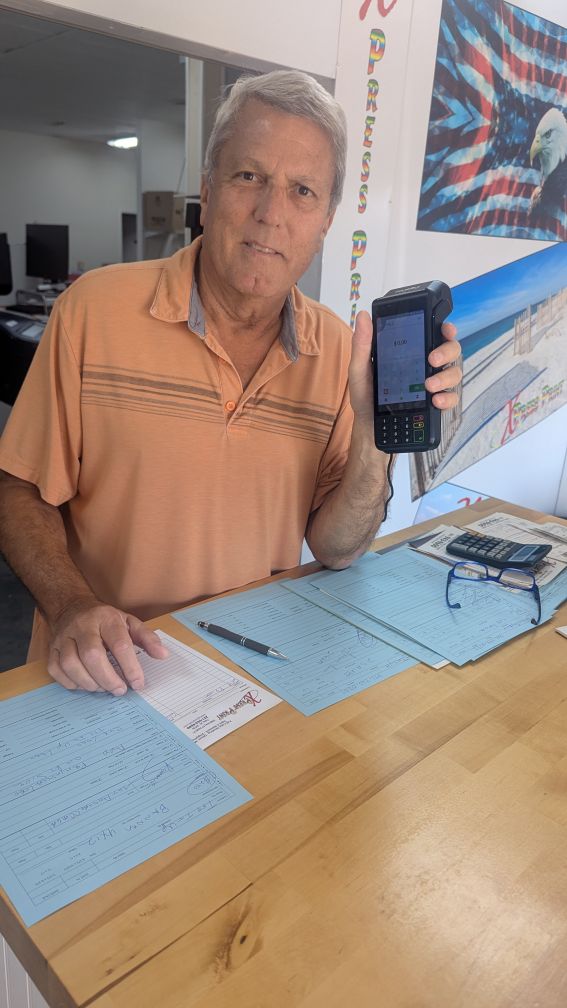
Harold Motter, Xpress Print
Same equipment, different processor
You don't have to give up your terminal
Already run Clover or a Square-compatible setup?
PayWavez supports 2,000+ POS integrations. We can equip you with Clover hardware directly, or work with the terminal you already have — the switch is on the processing side, not the countertop.
Want a free smart terminal instead?
PayWavez also places free smart POS terminals for qualifying merchants — no upfront hardware cost. See the terminal lineup.
Common questions
Frequently asked questions
Does switching to PayWavez mean I have to change my terminal or POS system?
No. PayWavez supports 2,000+ POS integrations, including Clover and Square-compatible hardware. We can equip you with a new terminal or work with compatible systems you already run — switching your processor doesn't require switching your equipment.
How is PayWavez pricing different from what Square, Clover, or Toast charge by default?
Square, Clover, and Toast's standard plans are merchant-paid — the processing fee comes out of your deposits. PayWavez's Surcharging and Dual Pricing programs pass the card cost to the cardholder instead, so eligible merchants pay $0 in processing fees. Our Flat Rate program is merchant-paid like a traditional processor, but at one simple, low rate with no hidden fees.
Is surcharging legal and compliant?
Yes. PayWavez's 3% surcharge program follows card network rules: it applies to credit transactions only, is disclosed to the cardholder at checkout, is capped within network limits, and is never applied to debit cards.
Is there really such a thing as no-fee credit card processing?
Yes, for credit card transactions. Under PayWavez's Surcharging and Dual Pricing programs, the card cost is passed to the cardholder instead of the merchant, so your cost on credit transactions is $0 with no monthly fee. Debit transactions and the Flat Rate program are priced differently — see the full comparison table above. Apply now to see your own numbers.
See your numbers, not just ours.
Run your own volume through the calculator, or apply directly — approval takes about 2 minutes.