
Fees & Rates
Am I Overpaying for Credit Card Processing? 6 Warning Signs
Most business owners never learn what a normal processing statement is supposed to look like, which makes it easy to overpay for years without noticing. These are the six signs worth checking on your own statement right now.

The six signs
- You can't find a line labeled "interchange." If your statement shows one blended rate with no breakdown of the real wholesale cost versus your processor's markup, you have no way to check if that markup is reasonable.
- Your effective rate is above 3%. Effective rate is your total fees divided by total volume. For most standard retail and service businesses, a rate meaningfully above 3% deserves a second look.
- You see multiple unexplained monthly fees. PCI fees, statement fees, batch fees, and "regulatory" fees stacked together can add up to real money with no clear description of what each one covers.
- You're locked into a multi-year contract with an early termination fee. This alone doesn't mean you're overpaying, but it does mean you can't easily leave even if you find out you are.
- Your rate has crept up over time with no explanation you remember agreeing to. Compare a statement from a year ago to today's -- if the base rate moved and no one told you why, that's worth a direct question.
- You've never once had a real conversation about your rate since you signed up. Processors that proactively review pricing as your volume grows are the exception, not the rule -- silence usually means no one is checking whether your rate still fits your business.
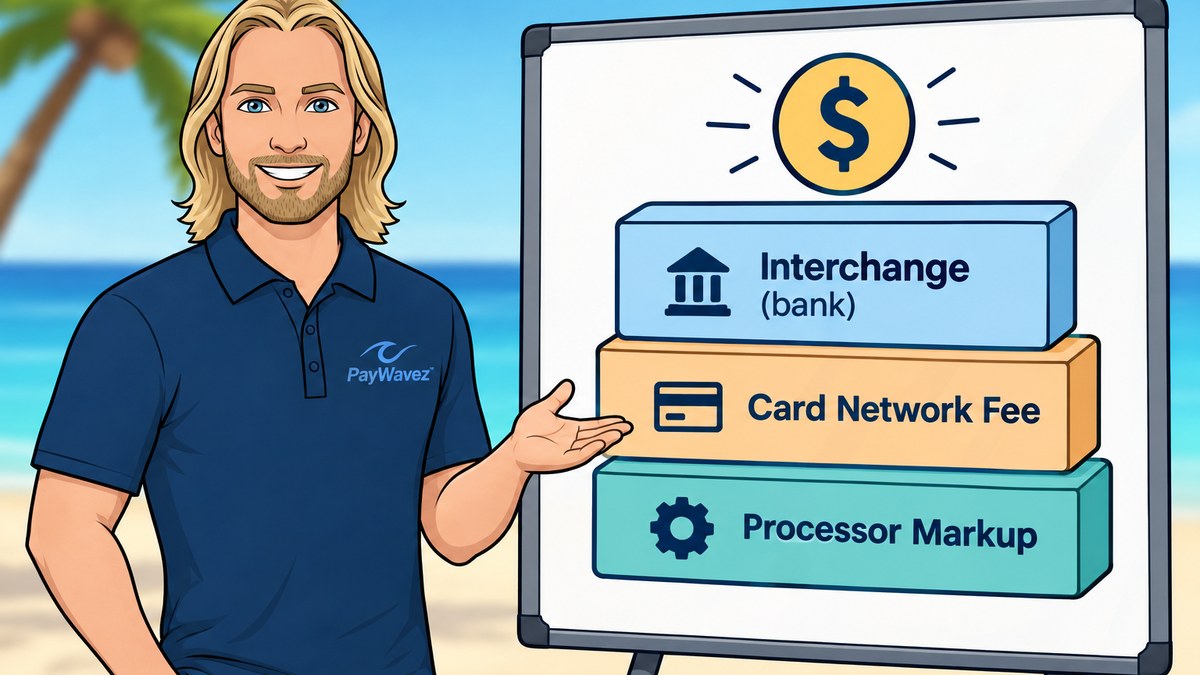
What a healthy statement actually looks like
A transparent statement shows interchange as its own line, separate from the processor's markup, so you can see exactly what's a network cost versus what your specific provider is charging you. It should also be legible enough that you could hand it to another business owner and they'd understand it without a decoder.
Ready to see your own numbers?
Run your real card volume through the calculator or apply in about two minutes.
What's a normal effective rate?
It varies by business type and card mix, but for most standard retail and service businesses, an effective rate meaningfully above 3% is worth investigating.
Do I have to switch processors to fix this?
Not necessarily -- sometimes a direct conversation about your current pricing resolves it. Other times switching is genuinely the better option. A statement review will tell you which situation you're in.