
Restaurant Operations
Why Restaurants Charge Credit Card Fees and How to Do It Right
As food and labor costs rise, many restaurant owners are passing credit card fees to customers to protect their margins. Doing this legally requires specific signage and the right technology.

If you have eaten out lately, you have probably noticed a small line item on your bill labeled "Service Fee," "Non-Cash Adjustment," or "Credit Surcharge." Restaurant profit margins are famously thin, often hovering between 3% and 5%. When a credit card company takes 3% of every transaction, it can effectively wipe out a restaurant's entire profit on a meal.
To combat this, many owners are moving away from the old model where the business pays all the fees. Instead, they are using programs that share those costs with the customers who choose to use credit cards. However, you cannot just add a random fee to your receipts. There are strict rules from card brands like Visa and Mastercard, as well as state laws, that dictate how you must handle these charges.
Surcharging vs. Dual Pricing: What Is the Difference?
Most restaurant owners get confused by the terminology. While they all result in the customer paying more for using a card, the legal requirements are very different.
1. Credit Card Surcharging
A surcharge is an extra fee added to a transaction only when a customer uses a credit card. Visa caps a credit card surcharge at 3% or your actual cost of acceptance, whichever is lower, and Mastercard caps it at 4% or your cost. Crucially, you are not allowed to surcharge debit cards, even if the customer runs them as "credit" without a PIN. This is where many restaurants get into legal trouble.
2. Dual Pricing
This is often considered the "gold standard" for compliance and customer satisfaction. With a Dual Pricing program, every item in your restaurant has two prices: a cash price and a card price. This is similar to how gas stations have operated for decades. Because you are offering a discount for cash rather than adding a penalty for cards, it is legal in all 50 states and much easier to explain to your guests.
Key Fact: A restaurant doing $1 million in annual sales typically pays $30,000 to $40,000 in credit card processing fees. Switching to a dual-pricing model can return nearly 95% of that money directly to the bottom line.
The Rules for Charging a Fee
If you decide to implement a fee for card usage, you must follow a specific checklist to stay compliant and avoid heavy fines from the card brands.
- Provide Proper Notice: You must post signage at your entrance and at the point of sale (the host stand or bar) notifying customers of the fee before they order.
- Itemize the Receipt: The fee must be a separate line item on the final receipt. It cannot be hidden inside the food price or a general "service charge" that goes to staff.
- Give 30 Days' Notice: Visa and Mastercard require you to notify your processor (acquirer) at least 30 days before you start surcharging. Mastercard also requires notice to Mastercard, which many processors handle for you.
- No Fees on Debit: Visa and Mastercard rules prohibit surcharging debit and prepaid cards, even when they are run as credit, and improper surcharging can lead to fines and problems with your merchant account.
"Passing on the fee isn't about being greedy; it's about keeping the doors open in an era where food costs have jumped 20% in just a few years."
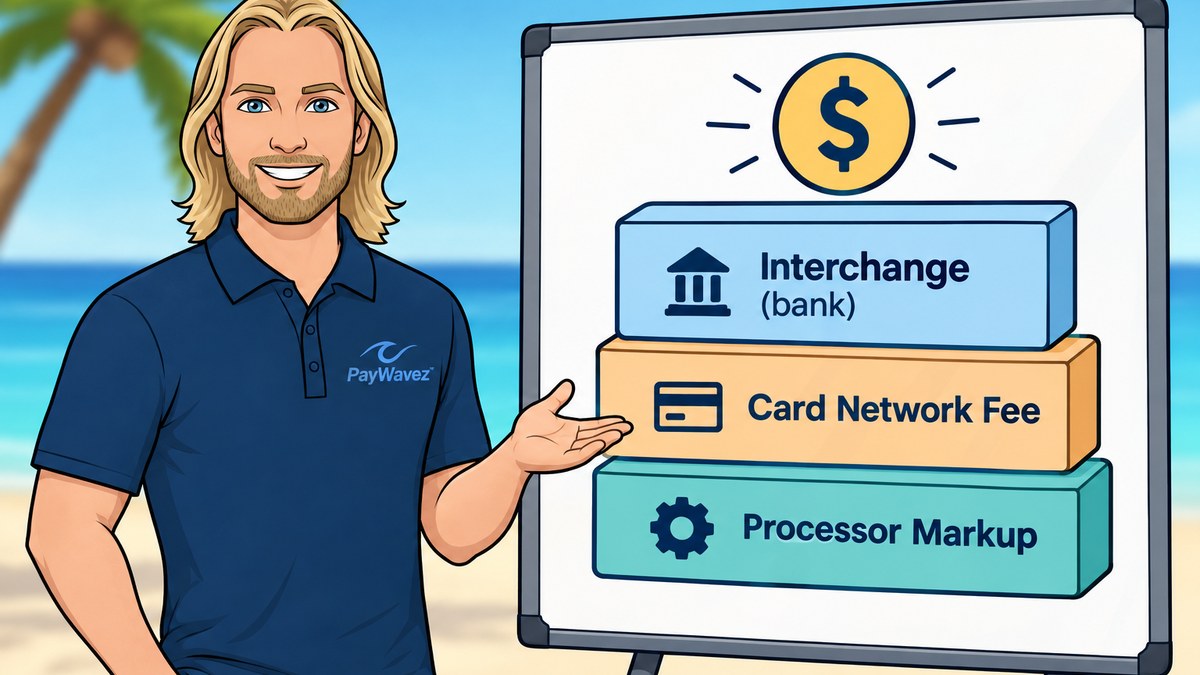
How Customers React
Many owners fear that charging a fee will drive customers away. In reality, most diners are now used to seeing these fees. The key is transparency. If a customer is surprised by a fee at the end of the meal, they will be upset. If they see a sign at the door and the menu clearly explains the "Cash vs. Card" pricing, they rarely complain.
For businesses in tourist-heavy areas, like those looking for credit card processing in Gulf Shores, these programs are even more common. Tourists expect these adjustments, and the savings can help a seasonal business survive the slower months.
Choosing the Right POS Setup
Not every Point of Sale (POS) system handles these fees correctly. Some systems make it hard to track cash vs. card totals, which makes your bookkeeping a nightmare. When you see a live demo of a modern payment system, you should look for how the software handles the math automatically. You want a system that calculates the fee instantly so your servers don't have to do manual math at the table.
Ready to see your own numbers?
Run your real card volume through the calculator or apply in about two minutes.