
Fees & Rates
What Is Interchange Plus Pricing and How Does It Work?
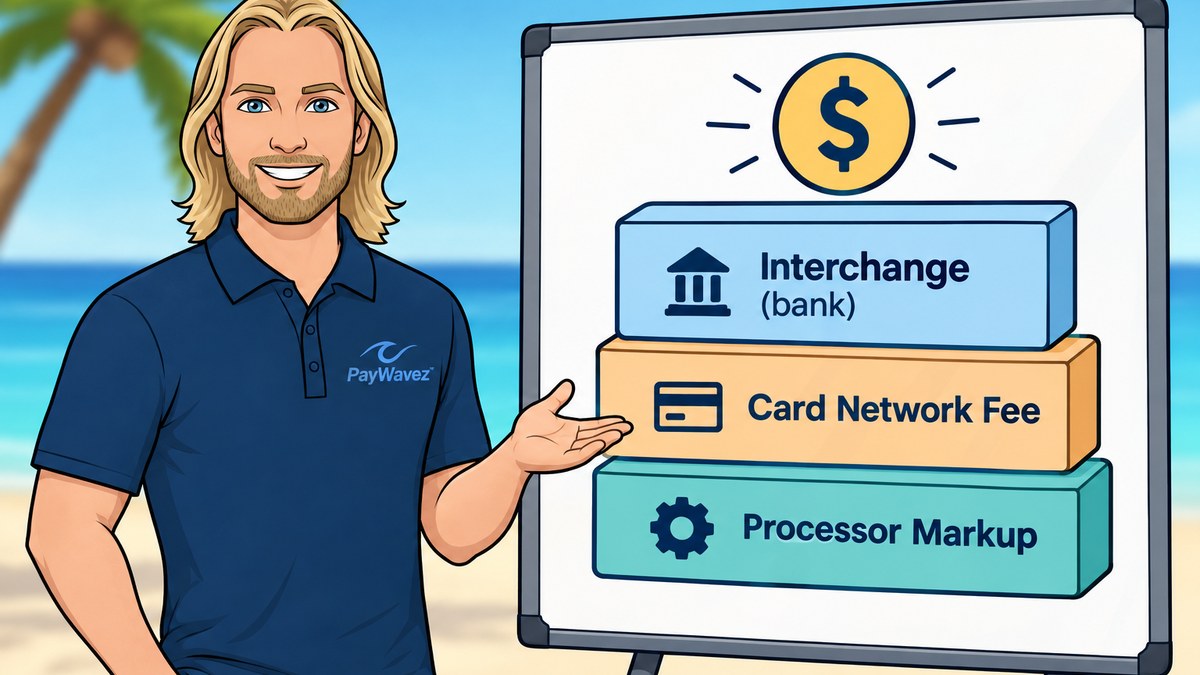
Interchange plus is widely considered the most transparent and fair way for a business to pay for credit card processing. It separates the wholesale cost of the transaction from the processor's profit, so you know exactly where every penny goes.

If you are looking at a quote from a company like Fidelity Funding or any other merchant service provider, you have likely seen the term "interchange plus." For many small business owners, credit card processing feels like a black box of hidden fees. Interchange plus is the tool that shines a light inside that box.
Before we dive into the math, it helps to understand the basics of what interchange fees are. In short, interchange is the non-negotiable fee set by card brands like Visa and Mastercard that goes directly to the bank that issued the customer's card.
The Two Parts of Interchange Plus
As the name suggests, this pricing model has two distinct parts: the Interchange and the Plus.
1. The Interchange (The Wholesale Cost)
This is the base cost of a transaction. There are hundreds of different interchange rates. For example, a basic debit card has a much lower cost than a high-end rewards credit card. With interchange plus pricing, your processor passes this exact cost through to you without adding a secret markup to the base rate.
2. The Plus (The Processor's Markup)
The "plus" is the only part of the fee that stays with your credit card processor. It is usually expressed as a small percentage and a per-transaction fee (for example, 0.20% + $0.10). This is where the processor makes their profit and covers their overhead. Unlike the interchange rates, this part is often negotiable.
Industry data shows that interchange fees typically account for 70% to 90% of the total fees a merchant pays. By using interchange plus, you ensure you are only paying the "true cost" for that 90%.
Interchange Plus vs. Flat-Rate Pricing
Many new businesses start with flat-rate processors like Square or PayPal. They charge one single rate (like 2.6% + $0.10) regardless of what card is used. While this is simple, it is often much more expensive. If a card only costs the processor 1.5% in interchange, they keep the entire difference as profit. With interchange plus, you get the savings when a lower-cost card is swiped.
For businesses in the Gulf Coast region, from mobile services to retail shops, switching to this model can save hundreds of dollars a month once your volume grows. If you're curious how these rates look in action, you can see a live demo of our reporting to see how transparent billing works.
Interchange-plus is the only pricing model where the processor has to show their cards. You see what the bank takes, and you see what the processor takes.
Why Merchants Prefer This Model
- Transparency: You can see exactly what you are paying the card brands versus what you are paying your processor.
- Cost Savings: You benefit directly from lower interchange rates on debit cards and local transactions.
- No Hidden Tiers: You don't have to worry about transactions being "downgraded" to expensive non-qualified tiers.
If you are evaluating a provider like 08 credit card processing or a similar service, always ask for a breakdown of the "plus" margin. If a company refuses to offer interchange plus and insists on a "tiered" plan, it is often a sign they are hiding higher margins in those tiers.
How to Read Your Quote
When you receive a quote for interchange plus, look for three things: the percentage markup, the per-transaction fee, and any monthly subscription fees. A fair provider will keep these consistent. At PayWavez, we focus on helping businesses find the right balance, especially for those looking for Alabama payment processing solutions that fit local needs.
Using a modern tool like the PayWavez Smart Terminal can also help you manage these costs by ensuring every transaction is processed securely and at the best possible rate. Modern terminals are designed to handle the data requirements that keep your interchange costs as low as possible.
In conclusion, understanding how interchange fees work is the first step toward taking control of your business expenses. By choosing interchange plus pricing, you move away from guesswork and toward a transparent, data-driven way of managing your merchant account.
Ready to see your own numbers?
Run your real card volume through the calculator or apply in about two minutes.