
Small Business Security
Secure Payment Strategies for Startup Contractors
Starting a contracting business means juggling projects and payments simultaneously. Here is how to ensure every transaction is secure, professional, and fast.
For a startup contractor, the first few jobs are about more than just doing good work. They are about building a reputation and ensuring you actually get paid for your labor. To do that safely, you need a system that protects both your bank account and your customer’s sensitive data. Security isn't just a technical requirement; it is a way to show your clients that you run a professional operation.
Before diving into the hardware, it helps to understand the baseline for the industry. You can find a deeper dive into the specific tools available in our guide on the best payment processing for contractors. Once you have the basics down, you can focus on the security layers that prevent fraud and chargebacks.

The Core Elements of Secure Contractor Payments
Secure payments rely on three main pillars: encryption, compliance, and verification. As a startup, you don't need to be an IT expert to get these right, but you do need to choose partners that handle the heavy lifting for you.
- Encryption: This turns a customer's credit card number into a code that cannot be read by hackers. This should happen the moment the card is swiped, dipped, or entered into an invoice.
- PCI Compliance: The Payment Card Industry Data Security Standard (PCI DSS) is a set of rules all businesses must follow. Using a compliant processor means you aren't responsible for storing the actual card data on your own phone or computer.
- Identity Verification: For large projects, always verify that the person paying matches the name on the card. This is especially important for high-dollar deposits where the risk of a fraudulent chargeback is higher.
Key Takeaway: Never store a customer's full credit card number on paper or in a standard spreadsheet. Using a secure vault provided by your processor is the only way to remain compliant and safe.
Using Mobile Tools on the Job Site
Most contractors are rarely behind a desk. You are in the field, at a client’s home, or at a supply yard. This is where the PayWavez Mobile App becomes a vital tool. It allows you to take encrypted payments directly through your smartphone using a secure Bluetooth card reader. This is much safer than writing down card info to enter later, which is a major security risk for both you and the client.
If you are working with clients across the region, from our home base in the Alabama payment processing hub down to specific local markets like Mobile, AL, having a mobile-first security strategy is the best way to keep your cash flow moving without interruption.
"A secure payment system is the difference between a contractor who looks like a hobbyist and one who looks like a professional business owner."
Digital Invoicing for Deposits and Milestones
For larger contracting jobs, you likely collect a deposit before work begins. Sending a secure digital invoice is far safer than taking a check or cash. Digital invoices created through a secure portal allow the customer to enter their own data into a protected environment. This reduces your liability because you never touch the card data yourself.
Trade-offs: Speed vs. Cost
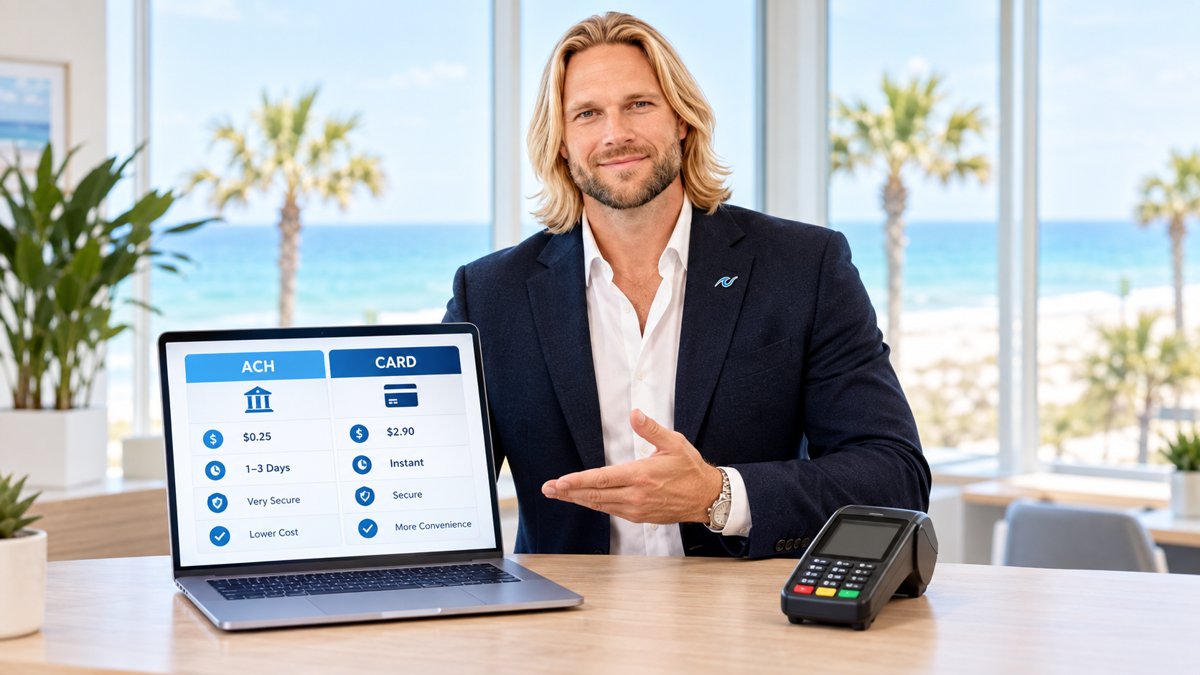
When setting up your startup, you will face a choice between card payments and ACH (bank transfers). ACH is often cheaper in terms of fees, but it takes longer to clear and offers fewer protections against non-payment. Credit cards are faster and more secure for the merchant because the authorization happens instantly, though the fees are slightly higher. Most successful contractors offer both to give clients flexibility while maintaining their own security standards.
Protecting your business starts with the right setup. By following these steps and reviewing the best payment processing for contractors, you can focus on the job site while we focus on the security. If you want to see these tools in action, you can always view our live demo to see how the software handles transactions in real-time.
Ready to see your own numbers?
Run your real card volume through the calculator or apply in about two minutes.