
Fees & Rates
Merchant Category Code Optimization: A Guide for Small Businesses
If you feel like you are paying too much for card processing, the problem might be your business classification. Learn how optimizing your MCC can save you thousands in hidden fees.

Merchant category code optimization is a powerful tool that most small business owners never use to reduce their overhead. When you first signed up for your merchant account, your processor assigned you a four-digit number called a Merchant Category Code (MCC). This code tells banks and card networks exactly what kind of business you run. However, if that code is wrong or outdated, you could be paying much higher interchange rates than necessary. Before we dive into the strategy, it is helpful to understand the basics by reading our post on merchant category code explained to see how these numbers are assigned.
What is Merchant Category Code Optimization?
Optimization is the process of reviewing and adjusting your business classification to ensure you are in the most cost-effective category possible. The card networks, like Visa and Mastercard, use these codes to set the baseline cost of every transaction. Some categories are seen as "higher risk" or "luxury," which carries a higher fee. Others, like charities or utilities, have much lower rates. For a small business owner, optimization means making sure you aren't accidentally sitting in a high-cost category when a lower-cost one would describe your business just as well.
Many businesses grow and change over time. A shop that started as a small gift store might now be primarily a cafe. If you are still using the gift store MCC, you might be missing out on lower rates specifically designed for food service. Merchant category code optimization is not about "gaming the system," but about accurate representation that reflects your current business model.
There are over 600 different Merchant Category Codes used by card networks, and the difference in interchange fees between two similar codes can be as high as 0.50% per transaction.
The Direct Link Between MCC and Your Processing Fees
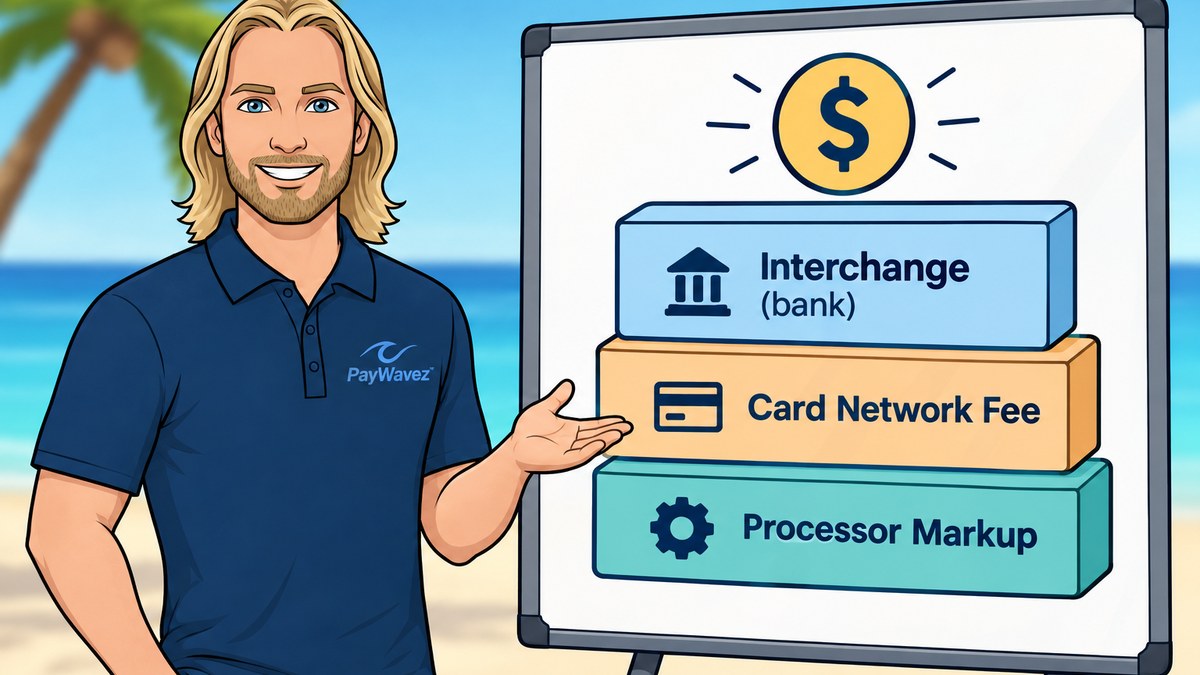
Every time a customer swipes a card at your terminal, a fee is paid to the bank that issued the card. This is called the interchange fee. The card networks publish massive tables of these fees, and almost every single entry is tied to an MCC. If your business is classified as a "High-Risk Retailer," your base cost might be 2.10% plus 10 cents. If you could qualify as a "Service Provider," that base cost might drop to 1.60%.
This is why merchant category code optimization is so critical for profit margins. Over a year of processing, a half-percent difference can mean thousands of dollars staying in your bank account instead of going to the card networks. If you want to see how these fees look in action, you can check out our live demo to see how modern POS systems track and manage transaction data.
Steps for Effective Merchant Category Code Optimization
To start optimizing, you first need to know where you stand. You can find your current MCC on your monthly merchant statement, though it is sometimes hidden in the fine print. Once you have it, follow these steps:
- Audit your primary revenue source: Look at your sales for the last six months. Does your current MCC actually match the majority of what you sell?
- Compare similar codes: Sometimes a business fits into two categories. For example, a landscaping company might be classified under "General Contractor" or "Lawn and Garden Services." One might have better rates than the other.
- Check for "Emerging Market" status: Card networks often create special, lower-cost codes for new industries they want to encourage. If your industry was recently added, you need to switch.
- Review your risk profile: If your MCC is flagged as high-risk, you will pay more for every transaction and face more scrutiny during chargebacks.
By taking these steps, you are taking control of your processing costs. It is one of the few ways to lower fees without having to switch your entire provider or negotiate a new contract from scratch.
"Most merchants assume their fees are set in stone, but an incorrect MCC is like paying a tax for a mistake you didn't even know you made."
Common Mistakes in Business Classification
The biggest mistake is letting the salesperson choose your MCC without questioning it. When you sign up for a merchant account, the representative might pick the first code that looks "close enough" just to get the application through. They aren't always thinking about your long-term costs. Another mistake is failing to update the code when you move to a new location or change your service menu.
For businesses in specific regions, like those we serve in Alabama payment processing, local industry trends can also change how codes are viewed. For example, a business in Gulf Shores credit card processing environments might be classified as "Seasonal Retail," which has different rules than year-round shops. If you don't keep your classification updated, you are likely overpaying.
How MCC Affects Your Chargeback Rights
Merchant category code optimization isn't just about the money you pay; it is also about the protection you get. Card networks have different rules for chargeback disputes based on the MCC. Some codes have shorter windows for customers to file a dispute, while others require more documentation from the merchant. If you are in the wrong category, you might find it much harder to win a chargeback case because the bank expects evidence that doesn't apply to your real business type.
For example, a service-based business is expected to show a signed contract or work order. If that business is accidentally coded as a retail shop, the bank will ask for a shipping receipt. Since the business doesn't ship anything, they lose the dispute automatically. Optimization ensures that the rules applied to your business actually make sense for what you do.
Working With Your Processor to Update Your Code
Once you identify a better code, you must contact your merchant service provider to request a change. Be prepared to provide proof. This might include your website URL, a copy of your menu, or a list of your top-selling items. The processor has to justify the change to the card networks, so the more data you give them, the better.
If your current processor refuses to help you with merchant category code optimization, it may be a sign that they are profiting from your higher rates. Transparent processors will want you to have the correct code because it reduces the risk of fines from the card networks and keeps your business healthy. At PayWavez, we prioritize this kind of transparency to ensure our clients aren't paying a penny more than they have to.
Conclusion
Merchant category code optimization is a simple but effective way to keep your small business profitable. By ensuring your MCC accurately reflects your business, you can lower your interchange costs, protect yourself against chargebacks, and avoid unnecessary high-risk labels. Don't let a four-digit number drain your bank account. Review your statement today and see if your classification matches your reality. For a deeper look at the definitions behind these numbers, remember to revisit our guide on merchant category code explained to help you identify the right category for your business.
Ready to see your own numbers?
Run your real card volume through the calculator or apply in about two minutes.