
Fees & Compliance
Is Dual Pricing Legal in All 50 States?
If you are struggling with high processing costs, dual pricing offers a 100% compliant way to eliminate your merchant fees by showing two different prices to your customers.
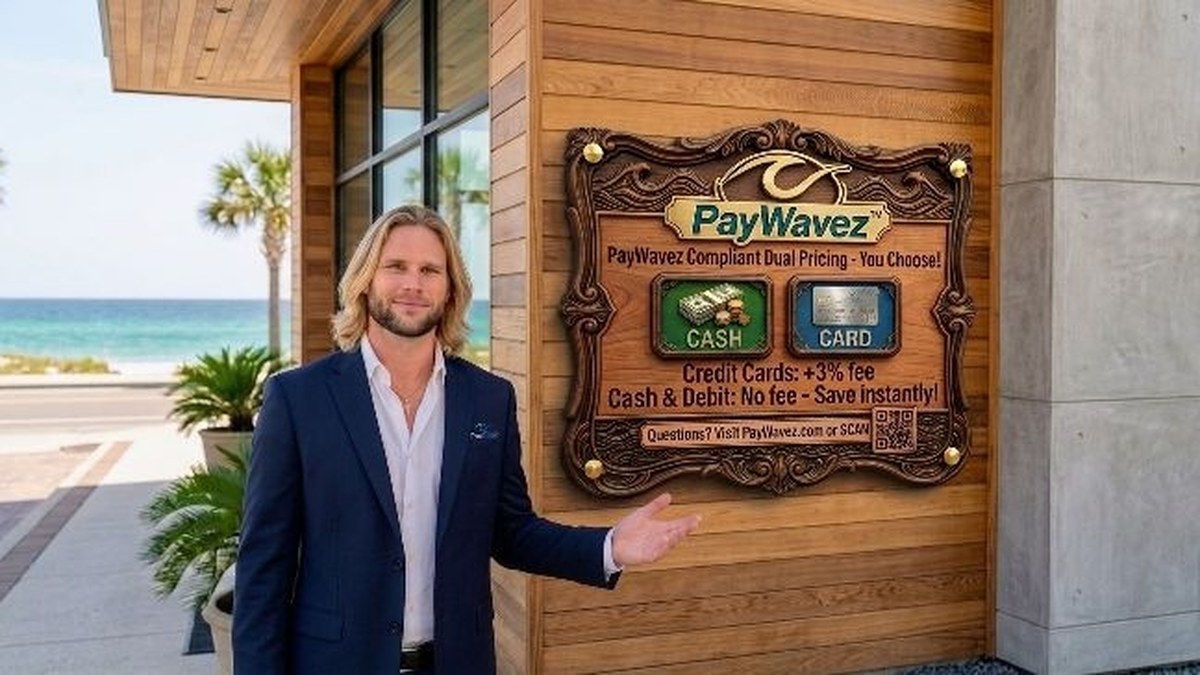
If you are wondering, "is dual pricing legal in all 50 states," the short answer is yes, but there are specific rules you must follow to stay compliant. For years, small business owners have watched their profits disappear into the pockets of credit card companies. Between interchange fees, markup rates, and monthly service charges, it feels like you are paying a tax just for being open. Dual pricing has emerged as the most popular solution to this problem. Unlike surcharging, which has various restrictions, dual pricing is built on a simple foundation: transparency. By showing a card price and a cash price, you empower the customer to choose how they pay while protecting your bottom line.
What Is Dual Pricing and How Does It Work?
Dual pricing is a straightforward concept that has been used by gas stations for decades. In a dual pricing model, every item in your store or every service on your menu has two distinct prices. One price is for customers who pay with a credit card, and a slightly lower price is for customers who pay with cash. This isn't a "fee" added at the end of the transaction. Instead, it is a clear choice presented to the consumer before they even reach into their wallet.
For a small business owner, this means your merchant service provider sets up your Point of Sale (POS) system to display both amounts. When a customer brings an item to the counter, the screen shows the cash price (e.g., $10.00) and the card price (e.g., $10.40). Because the card price covers the cost of the processing fees, the merchant receives the full $10.00 regardless of how the customer pays. This effectively brings your processing costs down to near zero.
According to recent industry data, small businesses that switch to a dual pricing model see an average increase in net profit of 2.5% to 4% by eliminating credit card processing overhead.
Is dual pricing legal in all 50 states?
Yes, dual pricing is legal in all 50 states. This is a common point of confusion because many people mix up dual pricing with "surcharging." While some states have historically tried to ban surcharging (adding a fee to a credit card transaction), dual pricing is viewed differently by the courts and by the major card brands like Visa and Mastercard. Because you are offering two separate prices rather than adding a penalty at the end, it falls under standard pricing freedom laws.
Federal law, specifically the Durbin Amendment to the Dodd-Frank Act, protects a merchant's right to offer a discount for different payment methods. Since dual pricing is essentially a "cash discount" that is clearly labeled, it is protected. Even in states like Connecticut or Massachusetts, where surcharging laws can be tricky, dual pricing remains a safe and legal harbor for merchants who want to offset their costs. If you are operating in the South, you can check our Alabama payment processing guide for more local details on how these rules apply to your region.
"Dual pricing isn't just a legal loophole; it's the most transparent way to show your customers the true cost of their payment choice while keeping your business profitable."
Dual Pricing vs. Surcharging: Knowing the Difference
It is vital to understand why dual pricing is the "gold standard" for compliance. Surcharging involves adding a percentage (usually up to 3% or 4%) to a credit card transaction at the point of sale. Surcharging comes with a mountain of rules. You have to notify the card brands 30 days in advance, you cannot surcharge debit cards (even if run as credit), and you must follow strict signage requirements. If you get it wrong, you can face heavy fines or have your merchant account shut down.
Dual pricing avoids most of these headaches. Because the "card price" is the standard price listed on the tag or the screen, you aren't technically adding a fee. You are simply offering a lower price for cash. This distinction makes it much easier to manage. Most importantly, dual pricing is much better for the customer experience. Customers generally dislike seeing a "convenience fee" added to their receipt, but they understand and appreciate a "cash price" that saves them money.

The Essential Compliance Checklist for Merchants
Even though it is legal, you can't just write a note on a napkin and start dual pricing. You need to follow a few core rules to stay out of trouble with your processor and the card brands:
- Clear Labeling: Your shelf tags or menus must clearly display both the cash price and the card price. If you only show one price and then change it at the register, you aren't doing dual pricing correctly.
- POS Integration: Your software must be able to handle the calculation automatically. It should print a receipt that shows which price was applied and why.
- Employee Training: Your staff needs to know how to explain the program. If a customer asks why there are two prices, the staff should be able to say, "We offer a lower price for cash to help keep our overall costs down."
- No Debit Surcharging: Even in a dual pricing model, you must ensure that your system handles debit cards correctly according to your specific merchant agreement.
Why Your POS System Matters for Dual Pricing
The biggest hurdle for most businesses is the technology. Older credit card terminals aren't designed to show two different prices. They only have one field for the amount. To do dual pricing legally in all 50 states, you need a modern POS system that can handle "dual-path" processing. This means the system calculates the card price and the cash price in real-time as items are scanned.
At PayWavez, we provide terminals and software that make this transition seamless. Whether you are a retail shop in a busy mall or a service provider like a plumber, your equipment needs to do the heavy lifting so you don't have to do math at the counter. For businesses in the Florida Panhandle, our Pensacola credit card processing experts can help you set up a system that is fully compliant with local and federal rules. You can also see the technology in action by viewing our live demo.
How Dual Pricing Impacts Your Customer Experience
Many business owners fear that if they stop paying the fees themselves, their customers will leave. In reality, the opposite is usually true. In an era of rising inflation, customers are used to seeing prices go up. When you implement dual pricing, you are actually giving them a way to save money. If they want to pay the lower price, they can use cash. If they value the convenience and rewards points of their credit card, they can pay the card price.
Transparency is the key to maintaining trust. As long as the two prices are clearly visible, most customers don't mind. They understand that it costs a business money to accept cards. By being honest about those costs, you build a stronger relationship with your community. It is much better than hidden fees or surprise charges that appear at the very end of a transaction.
Getting Started with Zero-Fee Processing
Switching to a dual pricing model is often the single most effective way to improve your cash flow. Imagine what you could do with the thousands of dollars you currently spend on processing fees every year. You could hire more staff, upgrade your equipment, or simply take home more of what you earn. The first step is to get a statement review. A professional can look at your current fees and show you exactly how much you would save by moving to a dual pricing setup.
Don't let the fear of "legality" hold you back. Now that you know the answer to "is dual pricing legal in all 50 states," you can move forward with confidence. The card brands allow it, the government protects it, and your business deserves the extra profit. It's time to stop paying for your customers' credit card rewards and start keeping your hard-earned money.
Ready to see your own numbers?
Run your real card volume through the calculator or apply in about two minutes.