
Fees & Rates
How to Stop Using Credit Cards as a Profit Drain for Your Business
Merchant processing fees can eat up to 4% of your gross revenue, but you don't have to accept those costs as a permanent part of doing business.

Many small business owners are searching for how to stop using credit cards as their primary source of overhead and profit loss. While you likely cannot stop accepting plastic altogether without losing half your customers, you can certainly stop letting those cards dictate your bottom line. In the modern economy, the cost of processing a transaction has shifted from a fixed business expense to a manageable variable. By understanding how merchant accounts work and how to leverage new legal programs, you can reclaim thousands of dollars every single month.
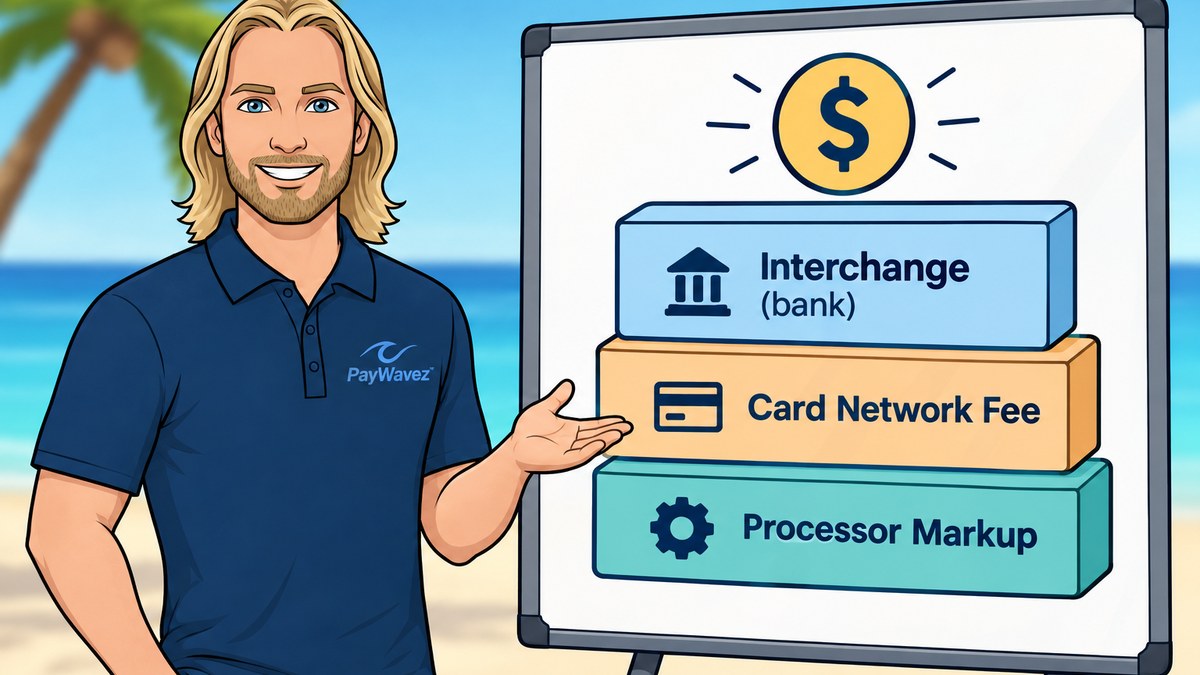
How to stop using credit cards as your biggest business expense
For decades, the standard way to run a business was to bake the cost of credit card processing into your overall prices. This meant that cash-paying customers were essentially subsidizing those who paid with expensive rewards cards. Today, savvy merchants are moving away from this model. Instead of viewing card acceptance as a cost of doing business, they view it as a service provided to the customer. When you change your perspective, you can implement programs like surcharging or dual pricing that effectively eliminate your processing bill.
The first step is to look at your current merchant statement. Most owners see a confusing mess of interchange fees, assessment fees, and markup. If you want to stop the bleeding, you need a transparent partner who shows you exactly where every penny goes. Many businesses in the South are turning to specialized Alabama payment processing experts to audit their statements and find hidden markups that shouldn't be there.
According to industry data, the average small business owner pays between $500 and $2,500 per month in credit card processing fees that could be eliminated through dual pricing.
The Power of Dual Pricing Programs
Dual pricing is currently the most popular way for merchants to offset their costs. It is different from a simple surcharge because it presents two distinct prices to the customer: a card price and a cash price. This is common at gas stations, but it is now moving into retail, restaurants, and service businesses. When you use a modern POS system, the terminal automatically calculates these prices so your staff doesn't have to do any math. This transparency keeps you compliant with card brand rules while ensuring you keep 100% of your sale price.
If you are curious about how this looks in practice, you can see a live demo of how modern terminals handle these transactions. It’s a seamless experience for the customer and a massive relief for your bank account. Business owners who make this switch often find that their monthly processing bill drops to nearly zero, leaving them with only a small monthly software or hardware fee.
Implementing Surcharging Legally
Surcharging is another method to stop the drain on your profits, but it comes with stricter rules than dual pricing. A surcharge is a fee added specifically to credit card transactions (debit cards cannot be surcharged under federal law). To do this legally, you must notify the card brands 30 days in advance and display clear signage at your entrance and at the point of sale. If you fail to follow these rules, you risk heavy fines or having your merchant account shut down. Working with a provider that automates this compliance is the only safe way to proceed.
Processing fees are the only utility bill that gets more expensive as you get more successful. It is time for small businesses to stop being the middleman for bank rewards programs.
Upgrading Your POS Hardware
Sometimes, the reason you are paying too much isn't just the rate—it’s the equipment. Old terminals often lack the security features required to avoid expensive non-compliance fees. Furthermore, outdated hardware cannot handle the complex logic required for dual pricing or cash discounting. By upgrading to a smart terminal, you gain access to better reporting, inventory management, and the ability to accept contactless payments like Apple Pay, which are often more secure and less prone to chargebacks.
In coastal areas where tourism is high, having mobile and reliable hardware is even more critical. For example, businesses looking for Gulf Shores credit card processing need terminals that can handle high volume during the summer months without crashing or incurring extra fees for slow processing. A modern POS doesn't just take payments; it protects your margins.
Avoiding Merchant Service Scams
As you look for ways to reduce costs, be wary of "too good to be true" offers. Many processors promise a 0% rate but hide their profits in high monthly "membership" fees, expensive equipment leases, or long-term contracts that are impossible to break. A reputable processor will be transparent about their markup and will never lock you into a four-year lease for a piece of hardware that only costs a few hundred dollars. Always ask for a side-by-side comparison of your current statement against their proposal.
Reducing Chargeback Risks
Another way to stop losing money to credit cards is to tighten your chargeback defenses. A chargeback happens when a customer disputes a charge with their bank. Not only do you lose the sale amount and the cost of the goods, but the bank also hits you with a fee (usually $25 to $50). You can reduce this risk by using EMV chip readers for every transaction, requiring signatures for large orders, and keeping detailed digital receipts. High-quality POS systems make it easy to fight these disputes by providing the evidence you need to prove the transaction was valid.
Ready to see your own numbers?
Run your real card volume through the calculator or apply in about two minutes.