
Fees & Rates
How Debit Card Interchange Fees Work for Your Business
Debit card transactions are usually the most affordable way to accept payments, but the underlying fees can still be confusing. Understanding these costs is the first step toward protecting your profit margins.

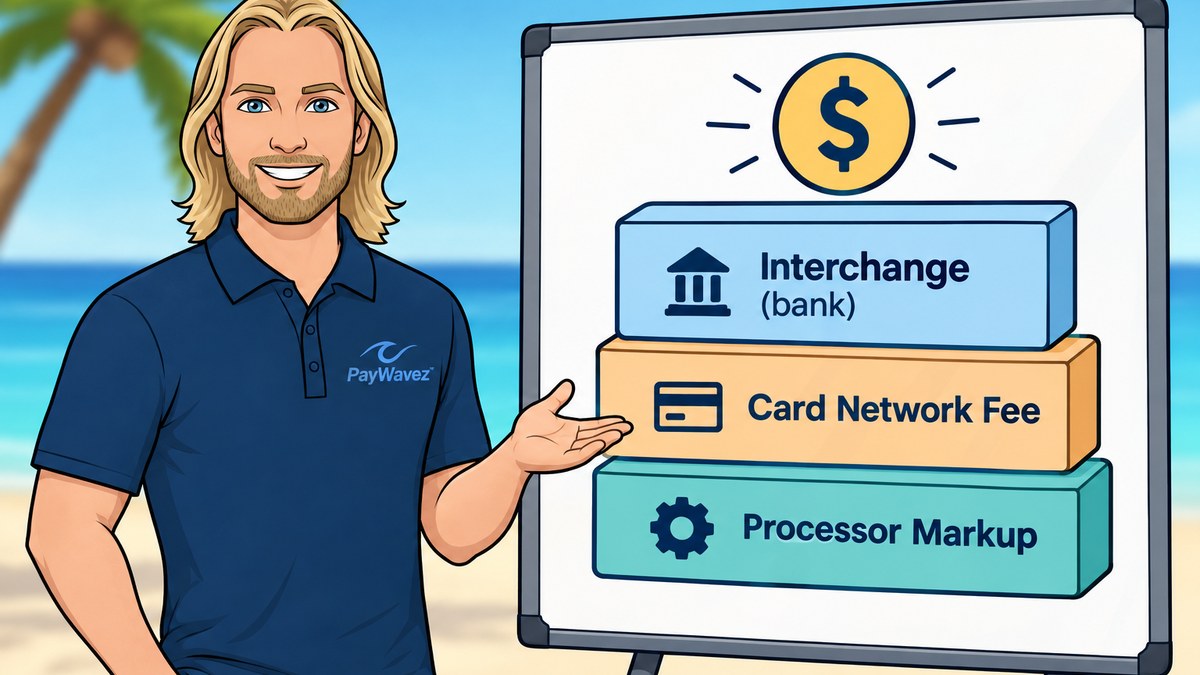
When a customer swipes a debit card at your business, the money doesn't just jump from their bank account to yours. A small fee is taken out along the way. This is known as the interchange fee. While it might seem like just another cost of doing business, knowing the details can help you spot overcharges on your monthly statement.
To get a full picture of the basics, you can read our guide on what are interchange fees on debit cards. In short, these fees are set by card networks like Visa and Mastercard, but the money actually goes to the bank that issued the card to your customer.
The Two Types of Debit Fees
Not all debit cards are charged the same way. The biggest factor is the size of the bank that issued the card. This is due to a federal law called the Durbin Amendment, which changed how much large banks can charge merchants.
- Regulated Debit: These cards come from very large banks (those with over $10 billion in assets). The government caps the interchange fee on these cards, making them very inexpensive for you to process.
- Unregulated Debit: These cards come from smaller local banks or credit unions. Because they aren't capped by the government, the fees are usually higher than regulated cards.
Under the Durbin Amendment, the interchange fee for regulated debit cards is capped at 0.05% plus a flat $0.21 per transaction. This is significantly lower than most credit card rates.
PIN vs. Signature Debit
How the customer uses the card also matters. If they enter a PIN, the transaction runs through a debit network (like Star or NYCE). If they sign for it or just tap without a PIN, it often runs through the Visa or Mastercard network. Generally, PIN debit is cheaper for larger sales, while signature debit might be cheaper for very small transactions, depending on your specific processor's setup.
Interchange is the price of admission for accepting cards, but debit gives you a way to keep more of your hard-earned money if you know how to route the transactions.
Many business owners in the Southeast, from our Alabama payment processing hub to local shops using Gulf Shores credit card processing, find that debit transactions make up the bulk of their daily volume. Managing these costs effectively requires the right equipment.
How to Lower Your Effective Rate
One of the best ways to handle these fees is to use a PayWavez Smart Terminal. These devices are programmed to handle different card types efficiently. Another strategy is "Dual Pricing." This allows you to offer a lower price to customers who pay with cash, while the card price covers the cost of the interchange fees automatically.
If you want to see exactly how these fees are hitting your bottom line, you should see a live demo of our reporting tools. We show you the breakdown of every swipe so there are no surprises at the end of the month.
In conclusion, while you can't change the rates set by the banks, you can choose a partner that doesn't add unnecessary markups on top of them. For a deeper dive into the technical side, revisit our article on what are interchange fees on debit cards to ensure you are getting the best possible deal for your business.
Ready to see your own numbers?
Run your real card volume through the calculator or apply in about two minutes.